Showing posts with label Philanthropists. Show all posts

Tuesday, June 10, 2008

Buffett's Motivation

Warren Buffett
Warren Buffett: Legendary corporate and philanthropic investor
There has been an interesting discussion over at Sean Stannard-Stockton's blog, Tactical Philanthropy, on the topic of "Why Do People Really Give to Charity?" You can follow it here:
http://tacticalphilanthropy.com/2008/05/why-do-people-really-give-to-charity

The discussion is revolving around Warren Buffett's decision to pass on the bulk of his estate to the Bill & Melinda Gates Foundation while he is alive, a decision that reversed many of his previous plans.

One of the recent comments was from a guest named "young staffer, who pointed to this intriguing article in FORTUNE magazine... an interview of Buffet by one of his close friends, Carol J. Loomis (FORTUNE Magazine editor-at-large).

Among the gems:
  • "The terms of Buffett's gift (require the Foundation) to annually spend the dollar amount of his contributions as well as those it is already making from its existing assets. At the moment, $1.5 billion would roughly double the foundation's yearly benefactions."
  • Buffett on why he had not previously donated much: "Someone who was compounding money at a high rate, I thought, was the better party to be taking care of the philanthropy that was to be done 20 years out, while the people compounding at a lower rate should logically take care of the current philanthropy."
  • Buffett has always been a good forecaster: "When we got married in 1952, I told Susie I was going to be rich."
  • Buffett on why he is not giving all his money to his kids: "Dynastic mega-wealth would further tilt the playing field that we ought to be trying instead to level."
  • And again: "A very rich person should leave his kids enough to do anything but not enough to do nothing."
  • Buffett on why he gave to the Gates Foundation instead of one of his family's own: "I came to realize that there was a terrific foundation that was already scaled-up - that wouldn't have to go through the real grind of getting to a megasize like the Buffett Foundation would - and that could productively use my money now."
  • Bugget on why now: "If I've found the right vehicle for my goal, there's no reason to wait."
  • Buffet on his motivation besides immediate impact through his gifts: "I have some small hopes that what I'm doing might encourage other very rich people thinking about philanthropy to decide they didn't necessarily have to set up their own foundations but could look around for the best of those that were up and running and available to handle their money."
The full article is brief, well worth the read and available here:
http://money.cnn.com/magazines/fortune/fortune_archive/2006/07/10/8380864/index.htm

Monday, March 24, 2008

Stop Emailing and Start Listening: New Survey on Donor Interests


Sea Change Strategies, a fund-raising consulting company in Takoma Park, Md., just announed findings from a survey it conducted along with Convio, an Austin, Tex., company that provides Web-based software for nonprofit groups, and Edge Research in Arlington, Va., which does research and polling for nonprofit organizations.

The study finds that wealthy people want to increasingly give online, according to Philanthropy.com.

The survey was based on data from 3,443 donors who had made gifts of at least $1,000 to a single cause in the past 18 months and donated an average of more than $10,896 per year to charities.

Sixty-four percent of the donors were age 45 to 64, and 57 percent had incomes of at least $100,000. The donors’ names were provided by 23 organizations that represent an array of causes, including advocacy groups, health organizations, international relief groups, public television stations, and Christian ministries.

Among the key findings:
  • Four out of five donors said they had made a charitable gift online, and a little more than half, 51 percent, said they prefer to use the Internet for their donations. Some 46 percent said that they expect to make a greater percentage of their charitable gifts online within the next five years.
  • Fifty-six percent said that charities send too many e-mail messages, and 47 percent said they do not read as many messages from charities as they did in the past.
  • Seventy-four percent said it’s inappropriate for a charity to obtain their e-mail address from a commercial database, while 82 percent said they don’t think it’s right for charities to send them messages about another organization.
  • Ninety-two percent of donors like getting year-end tax receipts by e-mail, while 83 percent want to get electronic updates on a charity’s finances and spending. Seventy-four percent said e-mail messages are appropriate when notifying donors that it’s time to renew an annual gift or to explain how a donation has been spent.
  • Eighty-one percent of donors dislike messages that take an urgent tone in seeking a repeat donation.
  • Forty-six percent of donors said the charity’s messages do a good job of making them feel connected to the organization, whil 43 percent said the messages are well-written and inspiring.


In case you're wondering, the picture is not really related to this article. I just found it when I Googled "older donors," and thought it was hilarious.

Thursday, February 7, 2008

Passing on the Biggest Baton in Philanthropy


Patty Stonesifer calls her transition out of the role of Chief Executive of Gates Foundation "a tune-up, not a radical change."

I'm not gonna lie, I've applied to about every job ever offered by the Gates Foundation. I could not imagine a better place to work for anyone interested in guiding the direction of our sector.

What do you think will be the ramifications of this transition?

----------------------------------
What do you think? Please click the COMMENTS button below.

Monday, January 28, 2008

Do us a favor.... don't open a food pantry.


I've blogged before, though somewhat unpopularly, about the Greed of Giving.

Not afraid to offend, I now venture back into that realm to talk about another troublesome trait: The Selfishness of the Supposed Sacrifice of Charity Workers.

I am so tired of hearing from my peers that we're making a sacrifice being employed in a non-profit organization. Making less money than we might earn in another pursuit? Perhaps... though few of us would be candidates for my organization's food pantry, I suppose we could argue that we -- like many of this blog's readers -- disappointed our dear financial planners when we made the choice to join this sector instead of pursuing more lucrative ventures.

But please, dear friends and fools of charitable intent, do not for one moment pretend that you are making a sacrifice. The opportunity costs are minimal in this regard when we look at the enormous gains we have made in other areas: seeing the impact of our work every day, feeling the sense of ownership over our actions, revelling in the glorious triumphs of lives changed through a series of events that we set in motion... we make no sacrifices to be here. Indeed, we might even be seen to be selfish.

For me, the sacrifice would be to forego these rewards in pursuit of monetary gain so that my family would be better off. So, though I be a Leo by birth and thereby much in need of constant praise, I graciously disagree with those who imply I've made some sort of sacrifice to be here.

That is why I understand what has driven so many people to pursue this career path. And yet, I bristle nonetheless when these people enter the sector by starting their own non-profit venture.

These feelings sprang forth anew as I read the Chronicle of Philanthropy's Give & Take blog, "Does America Need More Charities?" The blog cites cites Rosetta Thurman's piece, "So You Wanna Be Startin' Somethin': 5 Reasons You Shouldn't Start Your Own Nonprofit."

Judging by the few comments on the blogs so far, they are tapping into a growing sentiment that I share wholeheartedly:

We have too many darn non-profits out there.

Recent years have brought a rapid growth in the number of charitable organizations -- my theory is that people who were spit out of the dot-com bust are trying to apply their same entrepreneurial desires to the non-profit sector. Innovation is good, but mindless growth is not -- and that is often what I see.

I cannot tell you how many people have found out that I am a fundraiser and then pitched me on their plan to open a summer camp for "underprivileged kids" or something. They ask me how they can fund it, as if I walk around with this magic black book of funders who have never been pitched on such a thing. I tell them quite honestly: "The last thing we need is another non-profit."

Think about it. All those non-profits out there are wasting on average 15-25% on overhead for things such as fundraisers, managers and book-keepers.

Imagine if the same amount of money went to half as many non-profits out there -- the increased return would be spectactular even by doing nothing more than cutting all that overhead.

Imagine how many food pantries there are in a city like Dallas. Each of them spend money on fundraising, accounting, etc. (not to mention trips to the North Texas Food Bank to buy their food for $0.14 per pound). What if they all consolidated so that we could get rid of those fundraisers and accountants, streamline pick-ups and roll the savings into more food and case management? We'd likely give out much more food and provide much better service than our current system allows.

So, why don't we do this?

Because, as the golden role of fundraising says, "People don't give to causes or programs. They give to people."

If we consolidated four $1 million organizations into one, the result would not be a $4 million organization. Many donors would be lost in the transfer, as relationships were broken and staff consolidated.

So, yes, I realize that my pinko dream of a two-tiered system of Big Brother government on one side and Big Sister charity on the other is impractical . . . but I will continue to advocate on behalf of more funding for fewer non-profits.

Sorry, Mom and Pop Charity. I love ya, but ya ain't gettin' it done.

Consolidation leads to growth.
Growth leads to scale.
Scale leads to efficiency.
Efficiency leads to growth.

Repeat until tired.

Then retire.

Set up a planned gift to the Communities Foundation of Texas.

Die happy.

----------------------------------
What do you think? Please click the COMMENTS button below.

Tuesday, January 22, 2008

It's about the donor

In combing through the various feeds that I arrive in my inbox each morning, I came across this wonderful piece at the Donor Power Blog: "Is your fundraising a long, dull conversation?"

The blog cites a blog that is new to me -- Copyblogger, with their wonderful piece: "Why Great Copy is a Conversation, Not a Soliloquy."

(In reading a few of Copyblogger's other articles, I added it to my growing feed... alas, I could spend the entire day reading and getting nothing done! For shame, for shame, that we must all have day jobs...)

These articles reminded me of something very important:

It's not about you, Madam Fundraiser,
nor about you, Master Marketer;
it's about the donor.

Here is one simple way to improve your own approach to donors:

Look back at your most recent thank you letter to a donor. Circle every "I" or "we" (or the name of your organization) -- and then rewrite the letter so that you replace as many of those first person pronouns with the word "you," particularly when it's at the beginning of a sentence or a paragraph.

Force yourself to begin the letter with "You" instead of the boring "On behalf of the board, the staff and the thousands of starving, blind, crippled, poor orphans who somehow manage to wheel their way uphill, through the snow and into our office each day...."

See how the whole feel of the letter changes from being yet another bragadocious piece of fundraiser-marketer drivel to a relationship-building engagement piece.

Some organizations get it.

Some don't.

But sometimes, the ones that "get it" can get in trouble by taking it a bit too far.

Case in point: as a I blogged previously ("UT Southwestern: A Case Study in the Core Problem with Major Gift Fundraising"), UT Southwestern was recently torn up in local media because one of their more advanced fundraising practices leaked out: they have segmented their patient list so that top donors -- and even prospects -- are highlighted for "star treatment" when they arrive at the medical center.

Since I am sure that you, like me, was curious who made the list... I offer you this link to it (although I post the names below):

UT Southwestern list of high-profile people Dallas Morning News News for Dallas, Texas News for Dallas, Texas

SOME OF THE NAMES

UT Southwestern records information about well-to-do or well-known people to assure they receive select treatment during hospital visits. Here is a sampling of some of the people and their family members on the list, which was created in 2003, grouped by how they are known.

IN POLITICS

Vice President Dick Cheney (spouse)

Sen. Kay Bailey Hutchison (husband)

Rep. Ken Marchant (various family members)

State Rep. Barbara Mallory Caraway

Sen. Chris Harris (son)

State Rep. Tom Craddick (wife)

Former State Rep. Alvin Granoff

U.S. Dist. Judge Barefoot Sanders

State Rep. Tony Goolsby (spouse)

Former State Rep. Kenn George (spouse)

State Rep. Helen Giddings

Former Rep. Martin Frost

Former Secretary of Commerce Don Evans

Former Mayor Ron Kirk

Former Mayor Steve Bartlett

State Rep. Joe Driver

Congresswoman Eddie Bernice Johnson

Former Sen. Mike Moncrief (various family members), current Fort Worth mayor

Former Speaker of the House Gib Lewis (spouse)

Former Ambassador Robert Strauss (various family members)

Former Mayor Starke Taylor (family members and previous family members)

Former State Rep. Steve Wolens (mother, family members)

Former Mayor Laura Miller (listed as Laura Wolens, Dallas mayor 2002)

Former State Rep. James Horn (family members)

State Sen. Royce West

IN SPORTS
Dallas Cowboys owner Jerry Jones

Former Dallas Stars owner Norm Green

Former Dallas Cowboys quarterback Roger Staubach

Former Dallas Cowboys linebacker Chuck Howley

Former Cowboys wide receiver Lance Rentzel

Dallas Stars and Texas Rangers owner Tom Hicks

Former baseball player Mickey Mantle's family

Former Cowboys coach Tom Landry's family

Former Texas Rangers coach Bobby Jones

Former University of Texas football coach Darrell K. Royal

Former Dallas Mavericks general manager Norm Sonju

Astros owner Drayton McLane

CHEFS AND RESTAURATEURS
Dean Fearing

Shannon Wynne

Phil Vaccaro

Kevin Ascolese

Patrick Esquerre

Scott Ginsburg

IN MEDIA
Jim Moroney, publisher of The Dallas Morning News (and family)

Bob Mong, editor of The Dallas Morning News (spouse)

Robert Miller, columnist at The Dallas Morning News

Robert Decherd, chief executive officer and chairman of Belo Corp. (and family)

Wick Allison, publisher and editor of D Magazine

Prudence Mackintosh, contributor to D Magazine and Texas Monthly

Alan Peppard, columnist at The Dallas Morning News

Norm Hitzges, host for KTCK-AM (1310) (and spouse)

IN BUSINESS
John Albers, chief executive of Fairfield Enterprises

Ebby Halliday, founder of Ebby Halliday Realtors

Ron Anderson, president and chief executive of Parkland Health & Hospital System

Bruce Brookshire, owner of Brookshire Grocery Corp.

Don Buchholz, chairman SWS Group

Donald Carty, former chief executive of American Airlines (and family)

Comer Cottrell, founder of Pro-line International

Robert Crandall, former chief executive of American Airlines

Trammell Crow, developer

Thomas Engibous, chief executive of Texas Instruments

Jinger Heath, founder of BeautiControl.

Irvin Levy, chief executive of National Chemsearch

Kathleen Mason, chief executive of Tuesday Morning

Morton Myerson, chief executive of 2M Cos. (and family)

Lonnie Pilgrim, chairman of Pilgrim's Pride Corp.

Timothy Wallace, chief executive of Trinity Industries

IN ARTS AND SOCIETY
Magdalena Abakanowicz, sculptor

Jeremy Adams, screenwriter

Edith Baker, gallery owner

Emanuel Borok, concert violinist

Richard Hamburger, former executive director of Dallas Theatre Center

Pavlo Hunka, visiting Dallas Opera performer

Hilda Alsabrook, former Junior League president

Ann Corrigan, Sweetheart Ball, Crystal Charity Ball

Linda Gibbons, Sweetheart Ball

Marguerite Kirk, author

Marylyn Kelso, Cattle Baron's Ball

Jerry Naylor, former lead singer of Buddy Holly & The Crickets

----------------------------------
What do you think? Please click the COMMENTS button below.

Wednesday, January 2, 2008

Ask a Philanthropist how to Raise Money

Some time ago, Phil Cubeta asked on his Gift Hub blog: What Do Billionaires Want?. The article led to an interesting discussion between me and Phil, which you can read here.

I've been asking myself this same question many times over the past few weeks. There was an interesting article recently in The Washington Post called "How Groups of the Rich Diverge in Philanthropy" that is worth your time if you are interested in learning about your donors.

I also would highly recommend asking your own philanthropists what they like about your organization, how you could improve your communications to them and what they think that you could do to secure donations from additional people like them. Trust your donors -- they know what they want.


Similarly, check out this advice from well-known philanthropist Lewis B. Cullman.

Mr. Cullman's site is a must-read, particularly his section on good and bad fundraising letters as well as his highly informative brochure:

HOW TO SUCCEED IN FUNDRAISING BY REALLY TRYING, by Lewis B. Cullman


I hope that these resources are helpful as you launch into 2008!

----------------------------------
What do you think? Please click the COMMENTS button below.

Monday, December 17, 2007

How much does the leadership of an Executive Director or C.E.O. effect fundraising?

The blog Nonprofit Leadership, Innovation, and Change is the host of the December Giving Carnival. Written by Christopher Scott, the blog asks:

"How much does the leadership of an Executive Director or C.E.O. (a)ffect fundraising?"

This begs a deeper question... the answer to which is, itself, the key to successful fundraising.

"Why do donors give money to your non-profit?"

The answer is far different than the answer to "Why do PC users buy Microsoft products?" or "Why do travelers fly on Southwest Airlines?"

While the leadership of CEOs like Bill Gates and Herb Kelleher have greatly influenced the sales of their respective organizations, the reality is that the leadership of CEOs in the for-profit world rarely drives as significant a percentage of overall revenues as the leadership of CEOs in the non-profit sector.

The reason is fairly simple:

The customers of Microsoft are buying a product and the customers of Southwest are buying a service; the donors to your organization are not buying anything.

Why then are people giving you money?


Because they trust you.

Because they love you.

Because, when it all comes down to it, they believe that your CEO is someone more like Jan Pruit from the North Texas Food Bank and not someone like Carl Yeckel, formerly of the Carl B. and Florence E. King Foundation.

Would Boone Pickens have donated $6M to Jubilee Park without Ana Maria Narro, the Executive Director, to oversee the administration and use of his funds?

Clearly, Mr. Pickens was also heavily influenced by the organization's chair, his friend Walter Humann, as well as Dallas Mayor Tom Leppert, who promised revitalization of such areas as Jubileee Park in his run for office.

But as I listened to his remarks at the groundbreaking, I could not help but realize that he was not investing in the bricks and mortar that would occupy the corner of Parry and Bank Street where we stood. Nor was he investing in the plans to operate that center as a source of hope and support for this rebounding community.

He was investing in the leaders who would bring that plan to fruition, and whose spirits would fill that building with life.

The CEO of Central Dallas Ministries, Larry James, has frequently told me:

"Money follows people and ideas."

Mostly, money follows people who can bring those ideas into reality.

Bill Gates and Herb Kelleher are CEOs who have done this in the for-profit world. Jan Pruitt and Larry James are CEOs who have done this in the non-profit world without the benefit of revolutionary technology or favorable market conditions.

I think that every non-profiteer -- particularly those in the CEO role -- should read "Good to Great and the Social Sectors: A Monograph to Accompany Good to Great" by author Jim Collins. In the book, Mr. Collins argues that "true leadership is more prevalent" in the non-profit sector than in the business sector for these same reasons.

There are few things that can have a greater effect on fundraising than the leadership of a CEO. If your CEO doesn't get this, I'd suggest you have three options:

Monday, December 3, 2007

Would you rather have one $100,000 donor or 2,000 $50 donors?

UPDATE: Thanks to Unfair Park, GiftHub and The Chronicle of Philanthropy for linking to this post.

The anonymous blogger at Don't Tell the Donor.org makes some interesting points but overlooks some important details in their recent blog, "The difference between philanthropy and fundraising."

In summary for those who read this blog through syndication, the blog states that:

"I know some nonprofits that rely on big gifts from a small group of philanthropists in order to keep their doors open, however I personally feel better when an organization has hundreds (maybe thousands) of individual members who give provide many nonprofits with their mandate to exist."
We could argue pretty fruitlessly about the issue of needing to validate the organization's mandate (which I only see as relevant in order to satisfy the IRS' private vs. public charity test; it's a matter of tax benefits, not public good). However, I think that some valid points can be made on the matter of how these two scenarios impact non-profit organizations (and fundraising offices in particular).

In many ways, the anonymous blogger is right that it is better to have 2,000 gifts of $50 rather than a single gift of $100,000.

First of all, this situation is more sustainable. Making a political mistake with a donor in scenario one costs you $50, rather than $100K in scenario two.

And yes, as a fundraiser whose organization relies on major donors, I can tell you that there are people who have given upwards of $100,000 per year who suddenly stopped giving because we invited the wrong speaker to an event or our CEO made a comment with which they disagreed.

This is the downside of major gift programs: the tyranny of the donors.

(See this blog from Larry James, CEO of our organization, about Justin Hudnall's fabulous article, "Giver's Greed")

Second, the mission is more likely to be the focus rather than the donors if you receive lots of small gifts rather than a few large ones. As much as I support the sort of donor-centered fundraising advocated by Jeff Brooks at the Donor Power Blog or Phil Cubeta at GiftHub, major donors can wield undue influence over organizations that can frequently distract these organizations from their mission.

And yes, in the same way that I can give you examples of major donors who have pulled their giving to Central Dallas Ministries because of silly faux pas, I can also cite several instances in which we have been driven to make unwise decisions because a large checkbook was behind them.

I am proud to say that we have also turned down lots of money along the way because it would have pulled us off strategy. And I mean 6-figure and 7-figure gifts... nothing to balk at. We've maintained our integrity in key moments when donors were pushing the organization in the wrong direction.

But we are not perfect, and major donors have wielded disproportionate influence over our work at times.

And yes, we have at times been guilty of chasing money.... writing and securing grants for new programming because the money was available, not because we had the program in place and needed to fund it.

Again, these are problems that you would not have in the scenario of relying on many small gifts rather than a few large ones.

And if you're the Salvation Army, with a bucket on every corner soliciting pennies from the public, you don't have even to worry about filing a Form 990.

There are some problems, though, with relying on the masses for the bulk of your support.

First, some practical problems for the fundraising officers:

  1. If you believe in good stewardship, you send a receipt for every gift that you receive regardless of size. At $0.41, receipting 2,000 gifts is over $800 in postage. Factor in the costs of paper and printing, and your spending 1% of your gift just on bare-bones stewardship.

  2. Someone has to enter that information into your database and print those letters. Assuming it takes 2 minutes per acknowledgment (likely a very conservative estimate), that's nearly 67 hours in staff time. At a minimum wage of $5.85 per hour, that's an additional $4,000. Since most development officers make at least twice that, you're now talking about an additional 1% of your gifts on just bare-bones processing.

  3. Someone has to spend time depositing those gifts. That's more staff time, and possibly fuel costs. Likely, this is another 1% of your gift.

  4. Many of those $50 gifts will come in via credit card. That's another 3-5% cut off the top.

  5. You can therefore conservatively estimate that you will receive $6,000 to $8,000 less in the scenario of 2,000 $50 gifts rather than a single $100,000 gift.
These are just a few of the immediate costs associated with receiving lots of small gifts rather than a few large gifts. This doesn't even begin to include the costs of newsletters, event invitations, annual reports and other communications mailed to these donors. The costs can quickly grow to the point where these thousands of small gifts begin to contribute less and less to your organization's mission.

Let's take it to the next level: It is nearly impossible to build relationships with 2,000 donors who give you $50 compared to single donors capable of giving you $100,000. The return on investment of spending time calling $50 donors, sending them personal notes and meeting with them to tour programs is simply not there compared to cultivating major donors.

Are there people donating $50 to your organization who are capable of donating $100,000? Certainly. In fact, my organization recently received a commitment of $5,000,000 from a donor whose first gift was $100.

But this was a very rare exception to the rule. Although we eventually did a very good job cultivating this donor, his initial gift brought forth no such stewardship. In fact, he would have gone completely unnoticed without the help of an outsider -- who did not even know about his first $100 gift -- who referred him to us as a place to donate $50,000 at the end of last year.

This gift got our attention... which helped us to then add two more zeroes to that commitment within 12 months by stewarding the relationship.

We never would have done this for someone who donated $50 unless we realized that they were capable of the major gift.

On a related note, there is an insightful blog about at the Donor Power Blogcalled "The secretly wealthy donor fantasy." This blog debunks the myth of the $90,450 Direct Mail donor (in brief, they criticize that justify continually mailing the small-gift donor by saying that they may leave them money in their will when they die).

I do not believe that major giving programs should fully replace all other forms of fundraising (in fact, I previously blogged about some the problems of major gift fundraising in my November 10 blog, "UT Southwestern: A Case Study in the Core Problem with Major Gift Fundraising.").

However, if I had to choose between $100,000 from one person vs. $50 from 2,000 people, I would realize that there would be far more ramifications to my choice than simply the validation of my organization's mandate to exist.

I am thankful for the Don't Tell the Donor.org blog. At the end of the day, I think that any successful fundraising program needs to integrate both a high-volume, low-dollar annual gift program alongside a major giving program driven around a small number of high-dollar gifts.

Saturday, November 10, 2007

UT Southwestern: A Case Study in the Core Problem with Major Gift Fundraising


The Dallas Morning News recently ran a series of articles about how "UT Southwestern Medical Center at Dallas keeps a detailed list of wealthy, high-profile and influential people and their family members to ensure that they get favored treatment if they become patients."

This 'favored treatment' is getting the University into some very hot water, particularly with implications that people on the "A-List" are getting better medical care than people off the list (which the Medical Center denies here).

Read the latest story here.

The DMN's James Ragland wrote an interesting follow-on piece for this article entitled, "Hospital can offer extra courtesy, not better care." In the piece, Mr. Ragland states that, "UT Southwestern's operating budget in 2005-06... was $1.27 billion, of which 11 percent came from the state and another 16 percent came from federal grants and contracts. (Grants, gifts and other income account for 31%). That's why UT Southwestern is busy courting potential donors and why its Special Assistance Office is shamelessly using its growing list to make sure no one with special needs leaves disappointed."

Several observations about all this mess:

  • Every non-profit treats their donor differently than non-donors. Highlighting top prospects for "star treatment" is considered a best practice among fundraisers. Since the majority of donations are provided by a minority of an organization's donors, that minority gets disproportionately better treatment per capita. This is simply good fundraising.
  • Such a practice is considered "good business" in other fields. For-profit corporations roll out the red carpet for their shareholders. When I was a waiter at a restaurant, we were always put "on alert" when the owner came in for a meal. Companies like Neiman-Marcus have excelled by knowing when one of their elite customers is in the store and having their staff treat them appropriately. UT Southwestern is simply cultivating stronger relationships among its top donors; the problem, which I describe below this list, is that this practice makes the rest of us feel less valuable once we are aware of it.
  • The fact that this list was "secret" should be no surprise. As much as they might enjoy the star treatment, wealthy donors do not like to think that they have a target on their back. The perception that you are being "watched" makes most people uncomfortable, even if its for the purpose of treating you well. More on this below, as well.
  • Similarly, think of the common Internet practice of tracking a Web site visitor's reading habits so that the most relevant content can be put on the screen. When I go to Amazon, the Web site puts content in front of me that I am interested in. Do I like being tracked? Of course not. Do I enjoy the experience more because Amazon shows me what I like rather than showing me the same thing it shows everyone? Of course I do. UT Southwestern is simply tracking its donors the way that effective sales programs track their customers.
  • UT Southwestern's core mission happens to be providing a service that its top donors can utilize (healthcare services). By contrast, look at my organization (Central Dallas Ministries). Our mission is about providing services to the poor -- food pantries, health clinics, housing programs, etc. By virtue of their wealth, our top donors will never utilize our services. For me to criticize UT Southwestern by saying I would never implement their practice of giving preferred service to donors is ludicrous. The fact is, UT Southwestern should be praised by its peers for its advanced donor stewardship practices. They realize that their donors are not bank accounts: they are people.
  • By comparison, think about how universities and schools give preference to the children of alumni and donors in the admissions process. This is no revelation, and yet there are no "expose" articles in The Dallas Morning News about such practices. Again, it is simply considered good business practice for the universities.
  • Perhaps the reason for this backlash is that, whereas education has historically been more accessible only to the wealthy, access to healthcare is seen as a much more universal right. The idea that the wealthy would receive better treatment within the context of a healthcare system is therefore much less acceptable to us than in the educational environment. This is exacerbated by the fact that, in healthcare, lives are on the line.
Last night, I watched Michael Moore's film "SiCKO." Although I greatly enjoyed the film, and agree that we need universal health care, I am sure that Mr. Moore would have differing opinions on this issue than I do. I am sure that he would see this as another example of the rich beating down the poor.

And perhaps he would be right.

But the problem is not UT Southwestern. It is the American healthcare system's finance model.

UT Southwestern should not be blamed for acknowledging that their resource engine is driven by charitable contributions, and then implementing a system that would strengthen this engine. They should not become a scapegoat for the fact that, in America, poor people do not have access to quality healthcare.

The reality is that UT Southwestern needs donations to do its work, and those donations primarily come from wealthy people or through the influence of powerful people like politicians. Since these people utilize UT Southwestern's healthcare sevices, the organization has made the good business decision to pay special attention to the services delivered to those people.

Delivering inferior service to anyone would be a bad thing. But delivering bad service to someone on UT Southwestern's "A-List" would have the double impact of both hurting that individual as well as their potential to help UT Southwestern serve others.

That being said, the aforementioned articles all contain quotes from UT Southwestern's staff about how these "A List" donors are not receiving disproportionately better medical care, and they also contain some quotes from the donors themselves to back this up.

Of course, this is the problem with Major Gift fundraising:
you can't talk about it
.

Imagine if your "non-major" donors were told that they were second tier in terms of your concern about them or their relationship to your organization. Some could be greatly hurt -- particularly those who consider your organization to be one of their "major charities."

If a middle- or low-income donor is stretching to make a three- or four-figure gift to you, but you only consider donors who annually give $10,000 or more to be major donors, you could irreversibly hurt your relationship with those "minor donors" if you somehow make them aware of the fact that they are not on your "A-List."

We all want to be special. Particuarly as donors, we want to feel that we are important. We intuitively know that we are not all equally important, but we don't like to acknowledge that fact.

This is why I have never understood the use of titles such as "Major Gifts Officer." It acknowledges a tiering system that cannot help but make major donors feel like they are seen as nothing more than a bank account. And what about minor donors?

"Oh, hello there Mr. Ben E. Factor. What's that? You're here to see our Major Gift Officer? I am sorry. According to your gift record, you're only in the portfolio of our Annual Fund Director. Let me give them a ring and see if they can squeeze you in. Did you bring your credit card today?"

I realize that a title such as "Relationship Manager" or "Friendship Builder" would likely raise too many questioning eyebrows, but I think that fundraisers need to consider themselves to be much more in the business of building sustainable relationships with donors than simply in the business of securing gifts.

I applaud UT Southwestern for developing and implementing this advanced system of donor cultivation. I can guarantee you that the majority of the staff interviewed from UT Southwestern's peer organizations are going to consider implementing such a practice soon, even though they expressed such outrage at the idea.

I regret that this series of articles has forced UT Southwestern to take the blame for what is in reality the nature of their business.

But more importantly, I regret that we have all created a system in which these kinds of practices are necessary for a healthcare institution to do its basic work of healing the sick.

Saturday, October 20, 2007

School District raises $9.3 million in philanthropy


An amazing campaign recently hit an important milestone... though I am saddened that the school district must make such an enormous effort to raise funds, it is truly an honor to post this wonderful announcement here on this blog. Perhaps one day our country will make adequate and effective investments in the school system so that our public schools do not have to rely on charity to achieve their mission?

Thanks to the Dallas Morning News' Robert Miller for his coverage of this event.

DISD campaign raises $9.3 million
12:00 AM CDT on Tuesday, October 9, 2007

Dallas community leaders have rallied around a plan to achieve academic excellence in the Dallas Independent School District with a passion and sense of unity rarely seen in the city's history.

The campaign is announcing $1 million gifts today from the Harold Simmons Foundation, W.W. Caruth Jr. Foundation Fund of the Communities Foundation of Texas and Texas Instruments Foundation, bringing the total to $9.3 million.

"The Road to Broad" is being pushed by Dallas Achieves Commission as a candidate to win the nationally coveted Broad Prize for Urban Education by 2010.

J. McDonald "Don" Williams, a retired managing director of Trammell Crow Co. and co-chairman of Dallas Achieves Commission along with Pettis Norman and Arcilia Acosta, explained the background of Dallas Achieves.

The commission was organized by Superintendent Michael Hinojosa to support the goal of making the district one of the country's top-performing urban school districts within five years, with every graduate college- and workforce-ready.

It is a collaboration of the Foundation for Community Empowerment with the co-sponsorship of DISD, Texas Instruments and the National Center for Educational Accountability.

"I believe public school transformation is the most important task for the future of our democratic society, as well as our workforce," Mr. Williams said. "And I now know that it is doable.

"DISD is overwhelmingly poor and ethnic minorities, about 160,000 kids, [but] demographics need not be destiny.

"We plan to raise $20 million locally to leverage national funders to join us. Also, over time we must provide a much more robust and expansive early childhood set of programs for low-income children so they can arrive at school either already reading or ready to read.

"We have a long way to go here in Dallas, [but] this transformation is possible."

Other major donors include:

• $450,000 to $1 million – Hoblitzelle Foundation, The Roger and Rosemary Enrico Foundation, Sally and Lee Posey and Ellen and J. McDonald Williams.

• $300,000 to $450,000 – Lisa Blue and Fred Baron, Nancy and Randy Best, Deedie Potter and Edward W. Rose and Gay and William T. Solomon.

• $150,000 to $300,000 – Belo Corp., Dallas Citizens Council, Molly and Gregg L. Engles, Linda W. Hart and Milledge A. Hart III, Hawn Foundation, H-E-B/Central Market; Susan and Larry Hirsch, Naomi D. Aberly and Laurence H. Lebowitz, Joy and Ronald Mankoff, The Eugene McDermott Foundation, Ellen and John McStay, Alice and Erle Nye and The Rosewood Foundation.

• $25,000 to $150,000 – American Airlines Inc., Austin Industries Inc., Nell and Henry C. Beck Jr., ChildCareGroup, The Constantin Foundation, Trammell S. Crow, The Dallas Foundation, Esping Family Foundation, Marguerite Steed Hoffman, The Lightner Sams Foundation Inc., Bobby B. Lyle, Ivette and Pettis Norman, The Vin & Caren Prothro Foundation, Cindy and Howard Rachofsky, Peggy and Carl Sewell, Phyllis and Ron Steinhart, Tenet Healthcare Corp., Todd Wagner Foundation, Washington Mutual Bank, Abby and Todd Williams and an anonymous donor.

Friday, October 12, 2007

Al Gore donates award from Nobel Peace Prize to climate change

Al Gore sent out this letter following his receipt of the Nobel Peace Prize....

"I am deeply honored to receive the Nobel Peace Prize. This award is even more meaningful because I have the honor of sharing it with the Intergovernmental Panel on Climate Change--the world's pre-eminent scientific body devoted to improving our understanding of the climate crisis--a group whose members have worked tirelessly and selflessly for many years. We face a true planetary emergency. The climate crisis is not a political issue, it is a moral and spiritual challenge to all of humanity. It is also our greatest opportunity to lift global consciousness to a higher level.


My wife, Tipper, and I will donate 100 percent of the proceeds of the award to the Alliance for Climate Protection, a bipartisan non-profit organization that is devoted to changing public opinion in the U.S. and around the world about the urgency of solving the climate crisis.

Thank you,

Al Gore"


Thank you, Mr. Gore, for standing by your beliefs and donating your $750,000 portion of the prize to the organization that is on the forefront of this fight in the U.S.

Thursday, October 11, 2007

Are relationships "everything" in philanthropy, today?


The blog Seeking Grant Money Today invited me to respond to some questions for the next Giving Carnival.
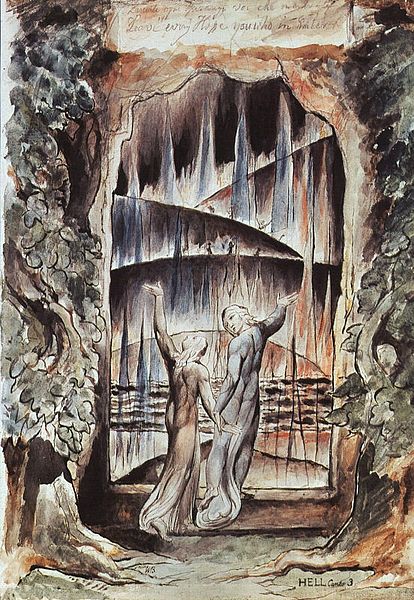
"Lasciate ogne speranza, voi ch'intrate..."

Are relationships "everything" in philanthropy, today?

Yes. But not just today: always and ever. Philanthropy cannot exist outside of the context of a relationship.

Here is some background on this term that we bandy about like a flag, full of pride in watching its colors wave but forgetting its deeper significance:

philanthropy: 1608, from L.L. philanthropia, from Gk. philanthropia "humanity, benevolence," from philanthropos (adj.) "loving mankind," from phil- "loving" + anthropos "mankind." Originally in L.L. form; modern spelling attested from 1623. Philanthropist is first recorded 1730.

Philanthropy is a means of connecting to others with whom we share some form of relationship, even if nothing more than shared humanity and cohabitation of the same earth. It is this "relationship" that compels us to practice philanthropy, that most human of acts. . . indeed, greater than human. For there is no reason for philanthropy. It is not a reasonable action within the void of self: it only makes sense relationally.


The term relation further comes from the Latin relationem, signifying "a bringing back, restoring." Hence, the very genesis of our understanding of relationships is a core identification of our connection to others within a shared space -- a common fate and destiny, even.


When people say that philanthropy is "all about the relationship," they generally are talking about the way that someone can convince a donor to invest in a third party (i.e. an organization). But we must remember that the fundraiser is irrelevant to the act of philanthropy. In the best of circumstances, they are a guide to the donor ... a facilitator of the donor's own natural philanthropic intent. They illuminate the path, they point the way -- they are at best a Virgil to the donor's Dante.


Although their relationship to the donor is important in allowing them to gain the position of guide through heaven and hell, it is the donor's relationship to the souls along the path that compels their philanthropy.


If a fundraiser wants to succeed, she must step aside and focus the donor on their relationship to the beneficiaries of their philanthropy (and, just as importantly, on their relationship to their idealized self).


If philanthropic relationships are not everything, what is critical to philanthropy's modern success?

Modern success is no different than past success. It cannot be measured in dollars or percentages. It can be measured only in terms of its impact on the relationship between the donor and the "other" to whom they are connected through their philanthropy.


A philanthropic action that secures funds but fails to build a connection between the donor and the mission is not a success. It is a transaction.


Philanthropy should aspire for more than the transactional: it should yearn for the transformational.


Fundraisers must realize that they are more case managers than marketers.


Who do relationships in philanthropy form between today, compared to the past?

The tools may be different and the pace a bit faster, but the relationships are the same. There are possibly more distractions, but that is likely the fault of the fundraisers who consider themselves marketers rather than relationship coaches.


Where is the innovation, in developing relationships in philanthropy?


The aforementioned tools can enhance the ability to quickly develop massive amounts of weak relationships: correspondence vehicles such as mail merges, emails and blogs dramatically expand the capacity of a fundraiser to shout from the rooftops. But to be more than a fly buzzing in a donors' ear, fundraisers must tap that eternal source of philanthropic drive: the connections that motivate philanthropic responses in the donor.


These tools are best utilized as a way of tracking relationship growth and analyzing donor data to determine their most responsive connections. Beyond that, they can be very helpful in their ability to mass-personalize otherwise impersonal items such as receipt letters and reports. This makes them feel far more personal than they are.


But in relationships, perception is often reality.

How do modern relationships in philanthropy begin; and how are they maintained?


The same as ancient relationships: they begin with our connections as children to the world around us; mature as we enter adolescence and begin to understand ourselves within the context of that world; and become realized when we enter adulthood and begin realizing the impact of those connections on our core identity. There is no new science to the development of our minds, souls and selves. Technology simultaneously creates more noise in the physical space in which our connections exist as well as greater capacity to cut through that noise to find what we want... but it's still all about relationships.


The music might have changed, but we still use the same muscles to dance.


What are philanthropic relationships' effects on the causes they are supposed to serve?


Relationships do not serve causes. People in relationships serve people. The effect of these relationships is that their strength determines the capacity of people to achieve the goals of the cause, but it must all fundamentally come back to people.

Is their oversight of relationships in philanthropy, and if so, what are the checks and balances on them?


Again, fundraisers need to see themselves as relationship managers more than marketers. There is still a far greater emphasis on marketing than relationship management in almost all fundraising courses and philanthropy seminars.


The checks and balances are that donors who do not have a strong relationship to the people served by the fundraisers' organization will react by ending their philanthropy.


Are there times that relations should be broken, and if so, in what situations?


Of course. There are expensive donors who do not have a positive relationship with the people served by the people seeking philanthropy. These relationships should be broken for the good of all parties. It does not help a client to be connected to a donor who does not have a positive relationship to them.


Again, philanthropy should aspire for the transformational over the transactional. It is not about funding. It is about achieving our purpose.


As a person of faith, I believe it all comes back to developing a relationship that mirrors our desired relationship to God. Securing gifts that do not come out of a positive relationship not only struggle to yield positive results, they can destroy the results of those gifts that do result from a positive relationship.


For the sake of your donors and the clients you serve, focus on building relationships between them that are based on mutual respect, compassion and a shared sense of responsibility to one another.

Saturday, September 22, 2007

14 of Forbes’ Richest Call Dallas Home


Found an interesting local blog this morning called Dallas is My Home. They posted this about the recent Forbes 400 List:


For a city that logistically has no reason to exist as a major metropolitan market, Dallas hasn’t done too bad for itself.

In Forbes Magazine’s recent list of the 400 wealthiest Americans (Forbes does have a fixation with lists!), 14 of that stellar class make their homes here.

They include:

  • Harold Simmons at #43 on the list. At the age of 76, he’s worth $7.4 billion. His money is from investments.
  • Robert Rowling is #49 with $6.4 billion. His pockets are lined with the profits from oil, gas & investments.
  • Henry Ross Perot is #76 with 4.4 billion at the age of 77. His money is from computer services and real estate.
  • Ray Hunt is #82. At $4.0 billion, he made his money in oil and real estate. He’s 64 and a modern day JR Ewing.
  • T. Boone Pickens is #117. At the age of 79, he’s worth $3.0 billion. His loot is from investments, oil and gas.
  • Mark Cuban is a young’un at 49 and is #161 on the list with $2.6 billion. His money is from Broadcast.com and he’s the owner of the Dallas Mavericks (NBA) and a recently named contestant on ABC’s “Dancing with the Stars”.

    With 6 Dallasites tied at #117 with $1.5 billion each, they include:

  • Gerald J. Ford. At the age of 63 he made his money in banking.
  • Andrew Beal. He’s 54 and his resources came from Beal Bank and real estate.
  • Timothy Headington. 57 years old from oil and investments.
  • Todd Wagner. At 47, he’s also from Broadcast.com.
  • Trevor Rees-Jones. At 57 he’s from oil.
  • Jerry Jones. 64 years old (though still trying to pass for 50 with all that plastic surgery he’s had done) and owner of the Dallas Cowboys (NFL) which was recently named the world’s most valuable sports franchise.

    Another tie at #380 with $1.3 billion each are:

  • Thomas Hicks at the age of 61, he made his money from leveraged buyouts.
  • Kenny Troutt at 59. He founded Excel Communications.


Lots of money in this silly little town that, as they rightly say, has little natural reason to exist....

How are you tapping into this vast well?

Sunday, September 16, 2007

Renewing the Faith of Fundraisers: Blue Rock Texas and La Reunion

I often struggle in my faith as a fundraiser. It can be so unfortunately easy to slip under the cold waves, as your dinghy is battered about by realities such as the disproportionately increasing number of non-profit organizations compared to the slow growth of donations, the ever-dwindling capacity to get the public's attention in a world bombarded by charity newsletters, emails, videos, blogs and appeals for support. . .

In the midst of this darkening storm, I am grateful today for two people who have renewed my faith in the uniquely human enterprise of philanthropy.

The first is Dodee Crockett, whom I recently met at the National Committee on Planned Giving's September meeting, which I blogged about here. Dodee is a CFP and a First Vice President and Senior Financial Advisor at Merrill Lynch. She spends her time advising clients on how to plan their estates, and how to utilize their wealth to achieve their dreams.

In her presentation, someone asked her to describe her Blue Rock project. A sudden wave of delight and surprise washed over her -- she had enjoyed discussing her professional work, but you could see that suddenly she had tapped into that deep well of passion that fills her heart and life with meaning. She energetically talked about the artist ranch and studio, Blue Rock Texas, that she and her husband had created.

"We do not have children, and realized that this would be our legacy," she explained. The Crocketts have planned their estate so that Blue Rock will continue to be funded when they leave this life. Dodee truly is practicing what she preaches to her clients.

The second person who brings joy and renewed hope into my life as a fundraiser is my dear friend, Catherine Cuellar. For the past six years, Catherine has worked tirelessly as one of the shining stars at KERA public radio (broadcast in Dallas at 90.1 FM). She recently announced that she will be joining Pegasus News as Managing Editor.

Among the many other things that Catherine does in her life, she co-founded an artist residency in the Oak Cliff area of Dallas called La Reunion, "where life and art unite." In addition to being a place for local artists to gather, the organization itself is galvanizing the community around the idea that local art is relevant, powerful and ALL AROUND us... we need merely open our eyes, and get out there to find it.

(La Reunion also puts on some of the best events in our city... definitely worth subscribing to their eNewsletter)

Dodee and Catherine have both created spaces within their lives and worlds that are dedicated to their passion. This is not about fundraising: it's about allocating resources -- not just money, but time, emotion, thought, love -- into something outside of yourself. It's about creating legacies.

Thank you, Dodee and Catherine, for renewing our faith in people's capacity to give.

Thursday, September 13, 2007

Centers of Influence and Planned Giving

Thank you to Phil Cubeta for encouraging me to attend this week's meeting of the North Texas Chapter of the National Committee on Planned Giving. The topic was "Translating Ideals into Action: Tools for Effective Planning with Your Client or Donor."

The speakers included:

  • Dodee Frost Crockett, CFP, First Vice President and Senior Financial Advisor, Merrill Lynch;
  • Kathryn Henkel, JD, Partner, Hughes and Luce, LLP;
  • Michelle Monse, JD, President, Carl B. and Florence E. King Foundation; and
  • moderator Jayne Grimes, CFP, Carter Financial Management, North Texas Chapter NCPG board member
The presentation was very informative, and reminded me a great deal of some recent conversations we've had at Central Dallas Ministries about working to engage the "centers of influence" who can affect our top prospects. For example, finding ways to educate financial planners and estate attorneys about CDM, so that they can refer their clients to us.

We are very grateful to the work of New York Life's Phil Cubeta in this regard, as well as our extremely devoted volunteer Bryan Cook, from UBS.

At one point in the presentation, the panelists were asked if they ever recommend specific charities to their clients. They all agreed that it is hard enough for planners to even ask their clients if they have charitable intent, let alone urge them to give to a specific charity. This was discouraging to me, but I understand the difficulty that they face. Asking about charitable intent is a loaded question for an advisor, akin to "are you or are you not a good neighbor?" or "how much or how little do you care about other people?" The client could feel very pressured to be or act a certain way, which is not the case when asked about their risk tolerance or even their feelings about leaving wealth to their children.

The panelists agreed that the only way they've ever recommended a charity is at the client's request, and then it is usually for advice on what sort of charity addresses a cause they already care about (i.e. "I want to help orphans in Dallas -- who does that?"). So, it's very unlikely that a wealthy donor will ask their financial planner, "Can you recommend a good charity to be the beneficiary of this foundation we're setting up?" (and even less likely that the answer will be your organization).

One of the planners did say that they keep an updated file on the "big charities in town.... Children's, the DMA, the Opera, UT Southwestern." No social services agencies were mentioned.

However, what really struck me was that the advisors all agreed that, when asked for advice on what sort of charity is involved in a particular cause, they call someone like the Dallas Foundation, the Communities Foundation of Texas or the Communities Foundation of North Texas to see "who is doing the best work in that area right now."

This confirms my belief that every local non-profit should submit a grant proposal to each of these foundations for every deadline that they have. And if you're like Central Dallas Ministries and have multiple services, submit for a different program each time so that they learn about your various services.

I think it's still wise to consider opportunities to engage advisors in learning about your organization's work for the purposes of referring clients to you, however unlikely it might be.

However, what is probably more valuable is to find ways to engage your current donors in considering ways to plan their lifetime giving.... and no, not just to your organization. Create forums in which they can consider the variety of organizations that they care about, and causes that resonate within their soul. Empower your donors with the ability to dream.

I think you'll find that our donors appreciate your concern for securing your relationship them, not with their estate. And I honestly believe that the funds will still be there for you.

And then, you need to be ready to have an advanced conversation with donors about what their giving options are. We don't all need to be experts on financial planning -- that's what people like Phil Cubeta and Bryan Cook are for. However, you need to be familiar with concepts like charitable remainder trusts and be able to explain them to donors.

I truly believe that fundraisers need to think of themselves less as marketers and more as financial planners.

Perhaps we should change our titles from things like "Director of Development" to "Philanthropic Advisor" or "Charitable Coach"?

I wonder how the title "Wealth Counselor" would look, embossed in gold, on a business card?

Speaking of counselors....

RANDOM QUESTIONS: Did they ever need philanthropy in Star Trek?

Monday, August 20, 2007

Performing Arts Center marks 100 $1M donors | Dallas Morning News | News for Dallas, Texas | Arts & Entertainment


The Dallas Morning News reports that the Dallas Center for the Performing Arts marks 100 $1M donors.

That's one hundred people who have collectively given more than $100 million towards the development of the Center. The list includes:

Kenneth and Ruth Sharp Altshuler

Harry W. Bass Jr. Foundation

Boeckman family, through Boeckman Family Foundation and JFM Foundation

Christine and Eric Brauss

Diane and Hal Brierley

Toni and Norman Brinker

Nancy and Clint Carlson

Mary Anne and Richard Cree

Linda and Bill Custard and Frank Pitts

Arlene and John Dayton

The Bradbury Dyer III Foundation

The Rosemary and Roger Enrico family

Amy and Vernon Faulconer

Candice and Robert Haas

Fanchon and Howard Hallam

Gene and Jerry Jones

Kim Hiett Jordan

Mark L. and Barbara Thomas Lemmon

Joy and Ronald Mankoff

Nancy Cain Marcus

Phyllis and Tom H. McCasland Jr.

Mrs. Eugene McDermott

Juanita and Henry S. Miller Jr. and the Miller family (Vance Charles Miller, Patricia Miller Donosky, Henry S. Miller III, Jacqueline Miller Stewart)

Dana and Charles Nearburg

Paulos Foundation, honoring Angela D. Paulos

Sarah and Ross Perot Jr.

Nelda Cain Pickens

The Vin and Caren Prothro Foundation

Emily Frances and John Raymond

Edward W. and Deedie Potter Rose

Sarah M. and Charles E. Seay

Stemmons Foundation

The Theodore H. Strauss family

Margaret and Jack Sweet

Debbie and John C. Tolleson

Ellen and J. McDonald Williams

Jean D. Wilson

Margot and Bill Winspear

Mary and Bob Wright

Cheryl and Sam Wyly

Dee and Charles Wyly

Anonymous (three)

Jane and Ron Beneke family

The Robert H. Dedman family

Leah and Jerry Fullinwider

Hegi Family Foundation

Cinda and Tom Hicks

J.L. and Sydney Thweatt Huffines

The Jerry R. Junkins Family Foundation

The Irvin L. Levy and Kenneth L. Schnitzer families

Nancy and Kenton McGee, Alexandra and Robert Lavie and the McGee Foundation

The Murchison family

Virginia and Robert Payne family

Margot and Ross Perot

Boone Pickens

Caren Prothro

Cindy and Howard Rachofsky

Jan and Trevor Rees-Jones

Peggy and Leonard Riggs

Sue Gill Rose in honor of Margaret McDermott

Peggy and Carl Sewell

Annette and Harold Simmons

Jane and Bud Smith

Gayle and Paul Stoffel

Bea and Ray Wallace

Donna M. Wilhelm

Kathy and Rodney Woods

Anonymous (two)

The Alberts family

The James M. Collins family

Marguerite Steed Hoffman in memory of Edmund Hoffman and in honor of Margaret McDermott

Carole and John Ridings Lee

Anonymous (two)

Alon USA

American Airlines

Bank of America

Brinker International

Communities Foundation of Texas

Dallas Leadership Banking Partnership

The Dallas Opera Landmark Fund

Dean Foods

EDS

Elsa Von Seggern Foundation

Eugene McDermott Foundation

Flagship Corporate Alliance

Hoblitzelle Foundation

JPMorgan Chase – Dallas

Kimberly-Clark Corporation

Landmark Partnership

The Meadows Foundation

Nokia

Once Upon a Time

Perkins-Prothro Foundation

The Rosewood Foundation

Texas Instruments

TXU Energy

For the full story, click here.

Friday, August 3, 2007

Raising Venture Capital for Philanthropy

I previously wrote about Homeward Bound's IPO -- not an Initial Public Offering, as it is known in the corporate world, but an "Immediate Public Opportunity ... to end homelessness." Up to 200,000 "fundraising shares" have been made available at $32 each.

The first share was famously purchased by Warren Buffet.

They are calling this the "first-ever charity IPO" . . . but this actually builds on efforts previously launched at other organizations, such as College Summit. For example, see this April 2006 story in Fast Company about a "private placement" that raised $15 million from 10 investors to support the organization's growth:

Next: A Nonprofit IPO?

Locally, you can read about the efforts of George Ellis in a recent Philanthropy World Magazine. Ellis helped "introduce venture philanthropy to Dallas." He has been critical in the growth and expansion of the Entrepreneurs Foundation of North Texas, led by one of the strongest Executive Directors in our community (Pam Gerber). Ellis and Gerber are working to help companies "do well by doing good," and their perspective on philanthropy builds directly on the work of the venure capital markets.

In fact, you can hear an interview with Pam Gerber here:

Philanthropy World on MN1 [feeds.mn1.com]

At CDM, we've been discussing how to apply these principles to our work. We've made a great deal of progress over the past year, thanks in great part to the work of Karen Waller, Teresa Hiser and our friends at the Dini Partners (who have been advising us on the development of our ongoing capital campaign).

These concepts are not new for such campaigns. However, we are now thinking beyond the simple construction of the building, and to the significantly expanded operations that we will inherit once the buildings are complete. We find ourselves asking:

  • How can we possibly ramp up our revenues by 50% over the coming years simply to handle these expansions? (not including the other organic growth that will occur in our other programs)
  • We do not currently have an endowment -- is there a role for such a funding vehicle within our organization? How could we build it, while the demand for funds is so tight and the organization continues to grow at 25%+ per year?
  • Instead of an endowment, is there a way to amass a large amount of "working capital" that we can use to fund our existing operations while refocusing our fundraising energies on the capital campaign?
  • How much will our social enterprise program be able to contribute through its resale operations and car auction program? Will these efforts even be generating a positive cash flow by the time these expansions arrive?
  • What do our donors -- particularly donors to our capital campaign -- expect of us in terms of expanding our annual fundraising? Are their own commitments going to grow along with their expectations, or are they simply wanting us to find new sources of support?
  • How can we move beyond the day-to-day, keep-the-lights-on mentality towards a longer-term, strategic perspective on fundraising?
  • What would a donor need in order to consider a sacrificial, major gift to be used in an unrestricted way to expand our work?
  • Is there a way to build a case for significant, multi-year commitments from donors?
We are not sure if this is venture philanthropy or simply effective fundraising. Whatever we call it, we understand that our current practices must change and we must adapt to the changing needs of our high-impact investors.

Thursday, July 26, 2007

Philanthromapping: Help me respond to Phil's challenge ....


Last week, I blogged about my dream of running a foundation. In response to that blog, I received a rather significant challenge from the grand master of the philanthropic blogosphere, Phil Cubeta.

His challenge was, in essence, to create a social justice "philanthromap." And yes, this term has been used before (though I first thought I was rather smart for coming up with it). Check out this 2005 post:

"Transforming Philanthropy with a New World Map" by Brooks Cole (Shift In Action)

Phil asked some very compelling questions, which I have been pondering for days (hence the relative lack of blog posts). I have yet to come up with a substantive response that I find suitable to his inquiry, so I would throw the question out to you:

What response do you have to his questions and ideas? Who are the allies we could secure to join us in this effort?

I have posted a selection from his commentbelow. I also recommend that you check out his own blog on this topic:

http://www.gifthub.org/2007/07/the-philanthr-1.html

Thinking through the system of roles, rules and relations is the breakthrough step. I have never been a foundation person, a big funder, nor a fundraiser. Yet as a trainer of advisors I am in the same ecosystem. How can we help our ecosysem, as well as our individual professions, thrive? Has to start by thinking of the roles and imagining ourselves in each, to see the world from the points of view of the others, then thinking where are the dysfunctional points, and how can we overcome them?

Nice to see Pam Gerber in your post too. A clear next step, Jeremy, would be to "map" the ecosystem around CDM. Who are the players around you? What institutions are already in motion with respect to you? City Hally? Dallas Foundation? DSVP? Entrepreneurs Foundation of North TX, various financial services orgs, legal firms, associations of professionals like NCPG and the estate planning counsel? Can you begin to literally sketch a map by sectors? I can help you add to it. Pam could too. So could Dallas Foundation. Why the heck has this not already been done?

Map it by place - Dallas. But then also map it by issues. What is the map of key players for social justice in the US?

Who funds social justice work nationally and locally? What else do they fund? How do they fund it? Who funds them? What are their constraints and criteria?

Who works as a professional with specific social justice funders? What are their strengths, weaknesses and blindspots?


I would like to accept part of Phil's challenge today: making this blog "a collaborative space...(to) convene key players and talk about the maps... (to) identify natural allies. Natural synergies."

Calling all allies! Please comment... even if it is just "I am in." I want to know if there's any interest in this sort of venture.

Wednesday, July 18, 2007

Let the rich take care of the poor?


On Sunday, I put up a blog comparing some credit card thieves to a misguided Robin Hood...

Today, on an interesting parallel, I'll highlight The Chronicle of Philanthropy's recent articles:

Can we trust the rich to take care of the poor?

Monday, July 16, 2007

(Donate) it Forward???

This is one of the more bizarre stories I've read in a long time... some people have too much money. :)

The Chronicle of Philanthropy: Anonymous Donor Leaves Money in Bathrooms

Sponsored By