Showing posts with label Personal Motivation. Show all posts

Wednesday, September 10, 2008

My Big Announcement

After three and a half years, I have made the very difficult decision to leave my position as Director of Development for Central Dallas Ministries.

On October 6, I will join Cynthia B. Nunn's team at the Center for Nonprofit Management in the role of Vice President of Development.

I admit, I did not see this move coming. I certainly did not look for it!

In fact, were it not for the work of my good friends Jim Chambers and Lesa Engelthaler at TNS Partners, I would never have applied. But Jim and Lesa are not the type to be turned down, and their persistence and sincerity convinced me that this move would be worth exploring.

I was drawn to the prospect of not just supporting the good work of one organization, but improving the work of over 1,300 organizations that are touched by the Center each year. One of my growing passions has been my work as an advocate for the overall non-profit sector, and CNM certainly stands at the forefront of the sector's efforts to improve itself as well as its standing in the community.

And I admit ... my fascination with the work of Robert Egger (founder of the D.C. Central Kitchen as well as the V3 Campaign) played no small part in my decision.

However, I do not plan to leave CDM ... merely to transition from "employee" to volunteer and advocate. Much of my heart and life are now wrapped up in the work of this wonderful ministry, and I have no desire to extricate myself from its future.

Beyond that, as I consider the road ahead, I realize that my path does not take me away from CDM's mission of building genuine community . . . in fact, if I am true to the Center's mission of improving the performance and impact of nonprofit organizations, my path will take me deeper into the heart of CDM's own mission.

This is still a difficult time for me. I am grateful that I am turning my work over to some of the best fundraisers in the city of Dallas: Lisa Goolsby, Jenny Fogel and Katie Goldberg are the "Power Trio" that ensures that CDM's wheels keep turning. Jessica Davila had the unenviable task of being my administrative assistant, and her incredible talents will continue to support the CDM Development team in their work. And thank God for Lisa Robinson, who just joined the organization as its Grants & Contracts Manager: her leadership will ensure that CDM continues its incredible trajectory of 20-30% annual revenue growth for the coming years.

Of course, the hardest part of my decision was facing the reality of being outside the immediate world of Larry James, the President & CEO of CDM.

I have worked with Larry nearly every day since February 1, 2005 . . . and I am continually amazed by the clarity of his vision for the community, the passionate dedication that fills his heart and the unbending strength of his will to improve life for our neighbors.

It is impossible for me to know how much I will miss being a part of this world (which is so perfectly described in these Core Values).

My greatest hope is that I will gain an even greater ability to help Larry and his team in this new position.

I look forward to the challenge.

Here is my new contact information, as of October 6th:

Jeremy Gregg, CFRE
Vice President of Development
Center for Nonprofit Management
2902 Floyd Street
Dallas, Texas 75204
gregg@cnmdallas.org
214.286.3470 ext. 224

Saturday, July 5, 2008

Question of the day... what makes a person become a fundraiser?

A Natural Fundraiser
Is there such a thing as a Natural Born Fundraiser?
Love of neighbor? Desire for money? Excessive guilt? Fear of hell?

What drives a person to become a fundraiser?

Are there natural traits that lend themselves to the task? Is there a gene that drives a person on in pursuit of wealth for others?

What went wrong in our childhood that made us decide to pursue this path???

[where: 75223]

Thursday, June 26, 2008

Question for the Day

Did you choose to be in your job, or did it choose you?

The figure of Jeremiah on the Sistine Chapel ceiling, by Michelangelo.
"Before I formed thee in the belly I knew thee; and before thou camest forth out of the womb I sanctified thee, and I ordained thee a prophet unto the nations."
- Jeremiah 1:5


[where: 75223]

Monday, June 16, 2008

Philanthropassion Contest

This blog's audience almost entirely consists of people who are so passionate about philanthropy that they have decided to devote a significant portion of their life to it. I want to know:

What drives your philanthropassion?


Here is my offer:
  1. If I get at least 5 responses, I will post the best response on the top of this blog for a month along with a link to any site that you want (your blog, your organization, etc.).
  2. If I get at least 10 responses, I will also send a copy of Charles Collier's "Wealth in Families" to the person who posts the best response.
  3. For every response above that, I will also make a donation of $1 per response to the charity of the best responder's choice. So, if I get 100 responses, I'll be making a $100 gift to whatever charity the winner chooses.
I'm taking a few days off to prepare for the CFRE exam and to fly to D.C. for the Hunger Justice Leaders conference. I look forward to reading about The Passion of the Fundraiser!


[where: 75223]

Monday, April 28, 2008

PostSecret

Years ago, I came across PostSecret and have remained fascinated by it.

PostSecret is an ongoing community art project where people mail in their secrets anonymously on one side of a homemade postcard.

Check it out here:
http://postsecret.blogspot.com/

PostSecret


----------------------------------
What do you think? Please click the COMMENTS button below.

Monday, April 7, 2008

VIDEO: She without arm, he without leg - ballet - Hand in Hand

I could think of no other way to introduce this amazing video than a poem by the master himself.

A Dedication
by James Merrill

Hans, there are moments when the mind
Resolves itself into a pair of brimming eyes, or lips
Parting to drink from the deep spring of a death
That freshness they do not yet need to understand.
These are the moments, if ever, an angel steps
Into the mind, like kings into the dress of a
Poor goatherd, for their acts of charity.
There are moments when speech is but a mouth pressed
Lightly and humbly against the angel's hand.


----------------------------------
What do you think? Please click the COMMENTS button below.

Friday, April 4, 2008

The Camel through the Needle's Eye, by Fr. Roch Kereszty

Fr. Roch Kereszty, O. CistI have been blessed with many mentors in my life: John Roppolo (2005 Fundraiser of the Year in the local AFP chapter), Larry James (2005-6 United Way Agency Executive of the Year), Willard Spiegelman and even the blogosphere's own Phil Cubeta has shaped me in his own way.

But few have had the deep, lasting impact of my dear friend and lifelong teacher, Fr. Roch Kereszty, O. Cist.

A native of Hungary, Fr. Roch was educated at the Athenaeum Anselmianum in Rome as well as Eotvos Lorant University in Budapest. He serves nobly yet humbly in many posts, including Head of the Theology Department at Cistercian Prep School. He is also, in many ways, the father of my faith as a Catholic, something I resisted bitterly while under his direct tutelage by later embraced.

Like many great teachers, his greatest lessons were learned many years after he left the daily passage of my life.

Below is one of his more insightful articles, which I have pasted in its entirety for your review. I find it to be incredibly challenging for all of us, particularly those in the business of soliciting or providing charitable donations:

“It is easier for a camel to pass through a needle’s eye than for a rich man to enter the kingdom of God”

"This is one of those sayings of Jesus which has caused much anxiety for many people (Mt 19:24). The first to be disturbed were the apostles themselves. “Who then can be saved?” –they ask Jesus. He restores their peace: “This is impossible for men but for God all things are possible” Mt 19: 26). In other words, wealth can be an insurmountable obstacle if someone is so attached to it as the young man was to whom Jesus told to sell all he had, give the money to the poor and literally follow him. But Jesus did not give the same command to every rich person. He even accepts invitations to rich people’s homes.

"He does not demand from Simon the Pharisee to sell his property. Instead, he tells his audience in a Pharisee’s house that when they invite people, they should invite the poor, the crippled, the lame and the blind, those who cannot repay the host (Lk 14: 12‐14).

"We also learn from the Acts of the Apostles and from Paul’s letters that there were rich people among the first Christians (Acts 20:7‐12). Their homes served as meeting places for the local churches in every city where Paul established a Christian community (Rom 16:23, 1 Cor 16: 15,19, Phlm 1‐2). Paul does not despair about their salvation as long as they are sharing their wealth with the poor generously and serve the needs of the Church.

"A just social order does not mean that everyone would have an equal share of goods, ‐‐ an impossible ideal anyway—it is one in which everyone who works and those who cannot work such as children, the sick and the elderly, would have a fair share in the goods of the world. In our sinful world, however, we must strive for this goal, but we will never fully reach it. Yet we can turn this sorry state of affairs to our own advantage. Are we affluent, this indicates our vocation to use our wealth to help those who are in need and in this way learn to be generous and even humble when we realize that some of the poor would more deserve the good life than we ourselves do.

"Are we poor or indigent, we can learn gratitude toward those who are helping us. The Fathers of the Church and more recently Paul VI explained in his encyclical opulorum Progressio that what is truly superfluous to the rich man and his family does not belong to him but to those in need. This, of course, cannot mean that all superfluous wealth ought to be given away in form of charitable donations. That would ruin the economy of any society. But wealth should be used to provide job opportunities, promote better health services and better education for children who are caught in the vicious circle of poor neighborhood and poor schools, they could endow foundations which provide effective help, etc.

"There are people, however, who are extremely generous with material help but also extremely proud of their status, talents and virtues. They can belong to the poor in spirit to whom the kingdom of heaven belongs only if they discover their real situation: all that they have and all that they are is undeserved gift, a cause for gratitude rather than pride. Blessed are they if they realize this fact before death deprives them of all they cherish."
----------------------------------
What do you think? Please click the COMMENTS button below.

Tuesday, March 11, 2008

Calling all Hunger Justice Leaders, ages 18-35!

Join me in applying to become one of Bread for the World's Hunger Justice Leaders. The award is an all-expense paid leadership training from June 14-17 in Washington, DC. The application is very brief, and mostly involves a 500-750 word personal statement. Mine is pasted below.

Every day, I go to work above the largest food pantry in North Texas. The path to my office is often packed shoulder-to-shoulder with hard working men whose wages are too low to cover both the rent and the grocery bill; young mothers whose only wish is to keep their babies healthy and well; seniors who go hungry rather than forego their life-sustaining medication.

These are not people whose bad choices landed them on the other side of the bread line. These are my neighbors. These are my brothers and sisters: fellow children of God who, like me, yearn for nothing more than a chance to use their talents to care for themselves and their families.

I grew up in the church. I went to religious schools my entire life, from kindergarten through college. I have studied the holy books of all the world’s religions, and seen my own brother stand before the altar to pledge his commitment to Christ as a priest of the Cistercian Order. God’s hand has guided much of my life.

Yet I have never seen His face more clearly than when I pass through the halls of my organization’s food pantry.

His voice speaks through the silence of those who come to us in need, whom we invite in not as “clients” but as partners in a shared effort to build community in this city that we love. The Holy Spirit’s presence is palpable when I wrap my arms around my neighbor whose bed is a box behind our building.

I am the Director of Development for Central Dallas Ministries. In some ways, my job is to raise funds for my organization’s efforts to end hunger in our community. In that role, I’ve had the privilege of seeing my organization’s revenues nearly double over the past three years.

Yet this is no achievement.

This is a testament to our failure as a community. Why should the area’s largest food pantry continue to grow each year for more than two decades? Why should neighbor after neighbor need to stand in line to receive food from our resource center? Why, above all, are there more churches in my community than homeless people – and yet so many of my friends continue to have no home? Night after night, they fight for sleep as a brief respite from the reminder that their situation could be solved if only each church in our town would take one of them into their care as did the Samaritan who did not even know of the glory that is our Jesus.

I will confess, I have occasionally left my office in tears because of our “success.” Every gift I secure for my organization helps us to feed more families, but these gifts alone will never solve the problems faced by my neighbors who rely on Central Dallas Ministries for support.

Our success can only be measured in our ability to put ourselves out of business.

We are yet many years away from that ambitious goal. With your help, I will use the 2008 Hunger Justice Leaders training to drive my organization closer to the day when no one qualifies for its services. I will take the knowledge gained from this event and apply it not only to my work as a fundraiser, but to my calling as a community organizer and to my daily life as a neighbor to those who suffer from chronic hunger.

I will use this opportunity to strengthen the network of committed Christians whose lives are similarly dedicated to capitalizing on this unique moment in the history of the world . . . when we finally have the knowledge and capacity to change the policies that perpetuate chronic hunger and generational poverty.

With your support, I will more firmly plant my feet in the ground and my shoulder more squarely against the wheel of change.

Together, as neighbors and friends, we can end hunger. Thank you for considering my application.


----------------------------------
What do you think? Please click the COMMENTS button below.

Monday, March 3, 2008

Who in the world would be an Executive Director?!?!

The Chronicle of Philanthropy reports that "A study released today shows that many potential charity managers are not inclined to pursue leadership posts, demonstrating how hard it could be to replace the baby boomers now retiring from top nonprofit jobs."

The findings -- cited in the image below (click here to enlarge -- are fairly alarming:When asked, "Do you want to be an executive director of a nonprofit someday?" two-thirds of respondents had either a negative opinion or an indecisive one.

The full report, "Ready to Lead? Next Generation Leaders Speak Out," is available free for downloading on the Meyer foundation Web site at http://www.meyerfoundation.org.


----------------------------------
What do you think? Please click the COMMENTS button below.

Sunday, February 24, 2008

A Fundraiser’s Confession

I’d rather be the anonymous box of fruit pulled from the vineyard;
I’d sooner be the stone that grounds the wheat pulled from the chaff;
I do not want my name and title hung upon a lanyard;
I prefer to be the trough than the blade that piths the calf.

Let board members bend their bows one last time, aimed at me:
my back is stiff and bent from rowing; my planned gift waits for thee.


----------------------------------
What do you think? Please click the COMMENTS button below.

Saturday, February 23, 2008

a prayer for my fellow fundraisers

Thanks to Larry James' Urban Daily for the following:

May God bless you with discomfort
at easy answers, half truths, and superficial relationships
so that you may live deep within your heart

May God bless you with anger
at injustice, oppression and exploitation of people
so that you may work for justice, freedom and peace

May God bless you with tears
to shed for those who suffer pain, rejection, hunger and war
so that you may reach out your hand to comfort them and
to turn their pain into joy

And may God bless you with enough foolishness
to believe that you can make a difference in the world
so that you can do what others claim cannot be done
to bring justice and kindness to all our children and the poor.

--a Franciscan Benediction

----------------------------------
What do you think? Please click the COMMENTS button below.

Wednesday, February 20, 2008

Thank you to The Nonprofiteer blog

Rather than post today, I will send a link to a blog that makes some criticisms of one of my previous articles. The Nonprofiteer makes some interesting points in her article, "Labor relations at nonprofits; or, Shut up and serve your indenture!," although I think that she misinterpretted some of my original argument.

I would welcome your thoughts on the discussion of non-profit compensation!

----------------------------------
What do you think? Please click the COMMENTS button below.

Sunday, February 17, 2008

So, you want to be a consultant?

I have never had a very positive view of fundraising consultants.

Even today, I remain a bit skeptical about their capacity to deliver meaningful results to clients. Fundraising is a business driven by long-term relationships -- something that short-term consultants can rarely improve.

Most non-profits could achieve the same results by simply doing some internal reorganization of priorities and business practices.

(And here I will say that I am deeply thankful to Karen Larabee Waller and the Dini Partners for their work at driving such changes at Central Dallas Ministries in preparation for our current capital campaign)

Using the expertise and perspective of consultants to reassess strategies and realign priorities can be an effective way to improve your organization's work. Hiring contract grant writers to build important proposals can also have some significant impact, as long as they work closely with the staff who will be in charge of implementing the program upon receipt of the proposal.

But engaging consultants to do the work of full-time employees is likely a mistake for both parties.

I can say this now with slightly more credibility, having recently served in such a consulting role to a non-profit organization. It was quite a thrill to enter a circle of accomplished fundraising executives and to have my opinions valued more highly merely because I was: a) from the outside, b) charging them by the hour.

Amazing how those two facts alone can increase someone's perceived value.

When I began the venture, I asked for advice from one of my friends and mentors, Janet C. Davis of Davis Interventures (and, of course, Janet Davis and the Velvet Living Room). Here is some of what she offered:

  • It is really all about scope.
  • Make sure that you are very clear in your contract (and get a signed agreement if you have not already) about what you will deliver and what they will deliver, and hold the line. It is easy to be in a meeting where you collectively discover an additional task that needs to be done for the project and for you to say “I’ll take care of that."
  • Make sure that you add it to your fees if it is significant.
  • Charge what you are worth.
  • Track your hours so that you know your actual hourly recovery.
  • Try to communicate with the client every day at least once so that they know that they are top of mind for you.
  • Make sure to reflect back to the client what you think they need so that their expectations are very clear.
  • Have a good time!
Janet is very good at her job. Her advice is incredibly valuable -- simple though it may seem, it is incredibly difficult to set boundaries with clients (particularly when you feel incredibly connected to their mission). For example, in my recent venture, I quickly found myself being attracted to the usual 50-60 hours of work despite my 8-hour weekly contract.

My congratulations to the non-profits and the individual consultants who are able to successfully navigate these treacherous waters.

----------------------------------
What do you think? Please click the COMMENTS button below.

Thursday, February 7, 2008

Passing on the Biggest Baton in Philanthropy


Patty Stonesifer calls her transition out of the role of Chief Executive of Gates Foundation "a tune-up, not a radical change."

I'm not gonna lie, I've applied to about every job ever offered by the Gates Foundation. I could not imagine a better place to work for anyone interested in guiding the direction of our sector.

What do you think will be the ramifications of this transition?

----------------------------------
What do you think? Please click the COMMENTS button below.

Monday, January 28, 2008

Do us a favor.... don't open a food pantry.


I've blogged before, though somewhat unpopularly, about the Greed of Giving.

Not afraid to offend, I now venture back into that realm to talk about another troublesome trait: The Selfishness of the Supposed Sacrifice of Charity Workers.

I am so tired of hearing from my peers that we're making a sacrifice being employed in a non-profit organization. Making less money than we might earn in another pursuit? Perhaps... though few of us would be candidates for my organization's food pantry, I suppose we could argue that we -- like many of this blog's readers -- disappointed our dear financial planners when we made the choice to join this sector instead of pursuing more lucrative ventures.

But please, dear friends and fools of charitable intent, do not for one moment pretend that you are making a sacrifice. The opportunity costs are minimal in this regard when we look at the enormous gains we have made in other areas: seeing the impact of our work every day, feeling the sense of ownership over our actions, revelling in the glorious triumphs of lives changed through a series of events that we set in motion... we make no sacrifices to be here. Indeed, we might even be seen to be selfish.

For me, the sacrifice would be to forego these rewards in pursuit of monetary gain so that my family would be better off. So, though I be a Leo by birth and thereby much in need of constant praise, I graciously disagree with those who imply I've made some sort of sacrifice to be here.

That is why I understand what has driven so many people to pursue this career path. And yet, I bristle nonetheless when these people enter the sector by starting their own non-profit venture.

These feelings sprang forth anew as I read the Chronicle of Philanthropy's Give & Take blog, "Does America Need More Charities?" The blog cites cites Rosetta Thurman's piece, "So You Wanna Be Startin' Somethin': 5 Reasons You Shouldn't Start Your Own Nonprofit."

Judging by the few comments on the blogs so far, they are tapping into a growing sentiment that I share wholeheartedly:

We have too many darn non-profits out there.

Recent years have brought a rapid growth in the number of charitable organizations -- my theory is that people who were spit out of the dot-com bust are trying to apply their same entrepreneurial desires to the non-profit sector. Innovation is good, but mindless growth is not -- and that is often what I see.

I cannot tell you how many people have found out that I am a fundraiser and then pitched me on their plan to open a summer camp for "underprivileged kids" or something. They ask me how they can fund it, as if I walk around with this magic black book of funders who have never been pitched on such a thing. I tell them quite honestly: "The last thing we need is another non-profit."

Think about it. All those non-profits out there are wasting on average 15-25% on overhead for things such as fundraisers, managers and book-keepers.

Imagine if the same amount of money went to half as many non-profits out there -- the increased return would be spectactular even by doing nothing more than cutting all that overhead.

Imagine how many food pantries there are in a city like Dallas. Each of them spend money on fundraising, accounting, etc. (not to mention trips to the North Texas Food Bank to buy their food for $0.14 per pound). What if they all consolidated so that we could get rid of those fundraisers and accountants, streamline pick-ups and roll the savings into more food and case management? We'd likely give out much more food and provide much better service than our current system allows.

So, why don't we do this?

Because, as the golden role of fundraising says, "People don't give to causes or programs. They give to people."

If we consolidated four $1 million organizations into one, the result would not be a $4 million organization. Many donors would be lost in the transfer, as relationships were broken and staff consolidated.

So, yes, I realize that my pinko dream of a two-tiered system of Big Brother government on one side and Big Sister charity on the other is impractical . . . but I will continue to advocate on behalf of more funding for fewer non-profits.

Sorry, Mom and Pop Charity. I love ya, but ya ain't gettin' it done.

Consolidation leads to growth.
Growth leads to scale.
Scale leads to efficiency.
Efficiency leads to growth.

Repeat until tired.

Then retire.

Set up a planned gift to the Communities Foundation of Texas.

Die happy.

----------------------------------
What do you think? Please click the COMMENTS button below.

Monday, December 17, 2007

How much does the leadership of an Executive Director or C.E.O. effect fundraising?

The blog Nonprofit Leadership, Innovation, and Change is the host of the December Giving Carnival. Written by Christopher Scott, the blog asks:

"How much does the leadership of an Executive Director or C.E.O. (a)ffect fundraising?"

This begs a deeper question... the answer to which is, itself, the key to successful fundraising.

"Why do donors give money to your non-profit?"

The answer is far different than the answer to "Why do PC users buy Microsoft products?" or "Why do travelers fly on Southwest Airlines?"

While the leadership of CEOs like Bill Gates and Herb Kelleher have greatly influenced the sales of their respective organizations, the reality is that the leadership of CEOs in the for-profit world rarely drives as significant a percentage of overall revenues as the leadership of CEOs in the non-profit sector.

The reason is fairly simple:

The customers of Microsoft are buying a product and the customers of Southwest are buying a service; the donors to your organization are not buying anything.

Why then are people giving you money?


Because they trust you.

Because they love you.

Because, when it all comes down to it, they believe that your CEO is someone more like Jan Pruit from the North Texas Food Bank and not someone like Carl Yeckel, formerly of the Carl B. and Florence E. King Foundation.

Would Boone Pickens have donated $6M to Jubilee Park without Ana Maria Narro, the Executive Director, to oversee the administration and use of his funds?

Clearly, Mr. Pickens was also heavily influenced by the organization's chair, his friend Walter Humann, as well as Dallas Mayor Tom Leppert, who promised revitalization of such areas as Jubileee Park in his run for office.

But as I listened to his remarks at the groundbreaking, I could not help but realize that he was not investing in the bricks and mortar that would occupy the corner of Parry and Bank Street where we stood. Nor was he investing in the plans to operate that center as a source of hope and support for this rebounding community.

He was investing in the leaders who would bring that plan to fruition, and whose spirits would fill that building with life.

The CEO of Central Dallas Ministries, Larry James, has frequently told me:

"Money follows people and ideas."

Mostly, money follows people who can bring those ideas into reality.

Bill Gates and Herb Kelleher are CEOs who have done this in the for-profit world. Jan Pruitt and Larry James are CEOs who have done this in the non-profit world without the benefit of revolutionary technology or favorable market conditions.

I think that every non-profiteer -- particularly those in the CEO role -- should read "Good to Great and the Social Sectors: A Monograph to Accompany Good to Great" by author Jim Collins. In the book, Mr. Collins argues that "true leadership is more prevalent" in the non-profit sector than in the business sector for these same reasons.

There are few things that can have a greater effect on fundraising than the leadership of a CEO. If your CEO doesn't get this, I'd suggest you have three options:

Monday, November 19, 2007

Is Your House Rockin?

Have you ever had someone come into your day very briefly, only to to have them leave an indellible mark on your life? Robert Egger, Founder of DC Central Kitchen, is one such person for me.

I have only met Robert once, when I was at an AFP conference in San Antonio, Texas. He delivered the most rockin' presentation of the entire week. I spoke with him for a few minutes afterwards, and will never forget his passion and genuine drive to change our world.

He has a fantastic blog, both in terms of content as well as delivery. He is travelling the country, and his blog features his writing as well as videos he has recorded. It is definitely worth checking out.

Here is a video from his recent trip to Austin, Texas. He makes some great points about the problems within the "poverty industry":

» RobertEgger.org » Is Your House Rockin? (Video)

Monday, November 5, 2007

Fundraisers need to take a stance: Tomorrow's important vote in Dallas


For those who might ask what this has to do with fundraising for social service organizations, let me respond by saying that I do not think that such fundraising should be strictly focused on bringing in revenues for one organization.

In our jobs as fundraisers, we should primarily be focused on advocating for an allocation of the community's resources in a way that supports our non-profit's mission.

Directly raising funds for our organization is obviously the clearest way to do that. However, taking actions that result in increased funds for organizations that complement our organizations' mission is also a worthy pursuit -- particularly when such actions "increase the pie," rather than simply reslice it.

But we also must not neglect the importance of supporting large, public initiatives that also complement our organizations' various missions. We must acknowledge that the government has a capacity to address the needs of society at a scale that dwarfs even the largest charitable efforts.

That being said, I realize that a 501(c)(3) cannot ask people to vote in a particular way. This limitation on "institutional communications" from your organization, however, should not limit your personal voice.

In addition to supporting initiatives that allocate resources in a way that supports their organizations' missions, fundraisers should also take actions to prevent the allocation of resources that stand against their missions.

In my case, I work for Central Dallas Ministries. Our mission is to share the love of God by building genuine community in the neighborhoods where we live and work.

We live and work in Downtown Dallas.

Downtown Dallas needs people to call it home, not just a place to work. Only then will it begin to provide "genuine community" to those who live and work there.

For that reason, I am going to ask all the Dallasites who read this blog to vote FOR PROPOSITION ONE tomorrow (November 6).

(This is not a request on behalf of Central Dallas Ministries, which takes no organizational stance on this or any other vote. This is my personal request, which comes out of my personal understanding of what is best for our community.)

Tollroads will not bring people to live Downtown. They will efficiently carry them in and out of it.

For this reason, I am going to ask you to consider voting FOR PROPOSITION ONE on tomorrow's ballot. This proposition's passage will help ensure that a tollroad is not built through the land where Dallas was supposed to receive a park.

For more information, please visit:
TrinityVote - A Community Movement to Reclaim the Trinity River Project

More importantly, please read this blog from the Dallas Observer's Jim Schutze:
At Least One Developer Thinks a Toll Road Taking People Away from the City's a Bad Idea

If the city wants to fill up downtown with the kind of energetic young people who might want to live there, he said, the city needs to get the rents downtown way down from the $1,400 level. He gave me a theoretical example of a project downtown where the owner needs to get $850 a month per unit to make money. What the city should do, he said, is subsidize those units so the rent will be $600 a month.

The key, he said, is not poverty-level housing or rich-people housing. It’s affordable housing. If the city were willing to spend its money making downtown affordable, then the city could develop the kind of occupancies downtown that would support retail, entertainment and neighborhood service industries.
Please consider reading the full blog
here.

Thursday, October 11, 2007

Are relationships "everything" in philanthropy, today?


The blog Seeking Grant Money Today invited me to respond to some questions for the next Giving Carnival.
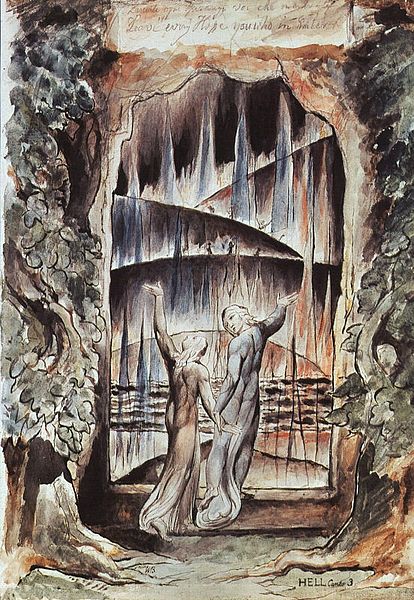
"Lasciate ogne speranza, voi ch'intrate..."

Are relationships "everything" in philanthropy, today?

Yes. But not just today: always and ever. Philanthropy cannot exist outside of the context of a relationship.

Here is some background on this term that we bandy about like a flag, full of pride in watching its colors wave but forgetting its deeper significance:

philanthropy: 1608, from L.L. philanthropia, from Gk. philanthropia "humanity, benevolence," from philanthropos (adj.) "loving mankind," from phil- "loving" + anthropos "mankind." Originally in L.L. form; modern spelling attested from 1623. Philanthropist is first recorded 1730.

Philanthropy is a means of connecting to others with whom we share some form of relationship, even if nothing more than shared humanity and cohabitation of the same earth. It is this "relationship" that compels us to practice philanthropy, that most human of acts. . . indeed, greater than human. For there is no reason for philanthropy. It is not a reasonable action within the void of self: it only makes sense relationally.


The term relation further comes from the Latin relationem, signifying "a bringing back, restoring." Hence, the very genesis of our understanding of relationships is a core identification of our connection to others within a shared space -- a common fate and destiny, even.


When people say that philanthropy is "all about the relationship," they generally are talking about the way that someone can convince a donor to invest in a third party (i.e. an organization). But we must remember that the fundraiser is irrelevant to the act of philanthropy. In the best of circumstances, they are a guide to the donor ... a facilitator of the donor's own natural philanthropic intent. They illuminate the path, they point the way -- they are at best a Virgil to the donor's Dante.


Although their relationship to the donor is important in allowing them to gain the position of guide through heaven and hell, it is the donor's relationship to the souls along the path that compels their philanthropy.


If a fundraiser wants to succeed, she must step aside and focus the donor on their relationship to the beneficiaries of their philanthropy (and, just as importantly, on their relationship to their idealized self).


If philanthropic relationships are not everything, what is critical to philanthropy's modern success?

Modern success is no different than past success. It cannot be measured in dollars or percentages. It can be measured only in terms of its impact on the relationship between the donor and the "other" to whom they are connected through their philanthropy.


A philanthropic action that secures funds but fails to build a connection between the donor and the mission is not a success. It is a transaction.


Philanthropy should aspire for more than the transactional: it should yearn for the transformational.


Fundraisers must realize that they are more case managers than marketers.


Who do relationships in philanthropy form between today, compared to the past?

The tools may be different and the pace a bit faster, but the relationships are the same. There are possibly more distractions, but that is likely the fault of the fundraisers who consider themselves marketers rather than relationship coaches.


Where is the innovation, in developing relationships in philanthropy?


The aforementioned tools can enhance the ability to quickly develop massive amounts of weak relationships: correspondence vehicles such as mail merges, emails and blogs dramatically expand the capacity of a fundraiser to shout from the rooftops. But to be more than a fly buzzing in a donors' ear, fundraisers must tap that eternal source of philanthropic drive: the connections that motivate philanthropic responses in the donor.


These tools are best utilized as a way of tracking relationship growth and analyzing donor data to determine their most responsive connections. Beyond that, they can be very helpful in their ability to mass-personalize otherwise impersonal items such as receipt letters and reports. This makes them feel far more personal than they are.


But in relationships, perception is often reality.

How do modern relationships in philanthropy begin; and how are they maintained?


The same as ancient relationships: they begin with our connections as children to the world around us; mature as we enter adolescence and begin to understand ourselves within the context of that world; and become realized when we enter adulthood and begin realizing the impact of those connections on our core identity. There is no new science to the development of our minds, souls and selves. Technology simultaneously creates more noise in the physical space in which our connections exist as well as greater capacity to cut through that noise to find what we want... but it's still all about relationships.


The music might have changed, but we still use the same muscles to dance.


What are philanthropic relationships' effects on the causes they are supposed to serve?


Relationships do not serve causes. People in relationships serve people. The effect of these relationships is that their strength determines the capacity of people to achieve the goals of the cause, but it must all fundamentally come back to people.

Is their oversight of relationships in philanthropy, and if so, what are the checks and balances on them?


Again, fundraisers need to see themselves as relationship managers more than marketers. There is still a far greater emphasis on marketing than relationship management in almost all fundraising courses and philanthropy seminars.


The checks and balances are that donors who do not have a strong relationship to the people served by the fundraisers' organization will react by ending their philanthropy.


Are there times that relations should be broken, and if so, in what situations?


Of course. There are expensive donors who do not have a positive relationship with the people served by the people seeking philanthropy. These relationships should be broken for the good of all parties. It does not help a client to be connected to a donor who does not have a positive relationship to them.


Again, philanthropy should aspire for the transformational over the transactional. It is not about funding. It is about achieving our purpose.


As a person of faith, I believe it all comes back to developing a relationship that mirrors our desired relationship to God. Securing gifts that do not come out of a positive relationship not only struggle to yield positive results, they can destroy the results of those gifts that do result from a positive relationship.


For the sake of your donors and the clients you serve, focus on building relationships between them that are based on mutual respect, compassion and a shared sense of responsibility to one another.

Stop Marketing and Start Fundraising


Our friends at Donor Power Blog really knock it out of the park again with this amazingly simple but powerful article:

The differences between bad and good fundraising

I would print the whole thing here, but this blog is so good that I want you to click on the link above and read it. And then I want you to subscribe to their blog.

And then I want you to read their Donor Power Pledge. It will be one of the best things that you have read since the Donor Bill of Rights.

And, please, tell me that you have read the Donor Bill of Rights....

Anyway, click the link above. Here's a teaser:

Bad Fundraising:
Organizations focus on their mission (as they should), but it has no connection with their donors -- in fact, the mission-focused people are often hostile to donors, seeing them as a problem, something they'd be better off without. As a result, fundraising becomes an external discipline, a set of practices they adapt out of necessity, like an ugly old coat that doesn't quite fit.

Good Fundraising:
Mission matters, and so do donors. They work to make their programs understandable and motivating to non-experts. Fundraising becomes an integral part of who they are, and everyone is responsible to make it happen


That analysis cuts so close to the bone that I think I need a skin graft...

Sponsored By