Showing posts with label Public Policy. Show all posts

Wednesday, December 10, 2008

Resources for Tracking Policy Changes re: Nonprofits

Advocacy Cartoon
Nonprofit Advocacy can be a messy business
One of our members at the Center for Nonprofit Management asked the following question earlier today:

"What resources (journals, subscription services, websites etc.) are available for learning about administrative (government) and judicial decisions affecting the operation of non-profits?"

I thought that it was a good question, so here are some of the answers we came up with:

  • TANO Public Policy web page – http://www.tano.org/public_policy_issues/ - legislative issues affecting nonprofits in Texas through the Texas Association of Nonprofit Organizations.
  • OMB Watch www.ombwatch.org - provides updated infor­mation about the latest pending federal legislation and regulation affecting non-profits as well as uses of technology for public policy participation. "The OMB Watcher," an e-newsletter, discusses key public policy issues racing the non-profit sector and environment. OMB Watch also co-chairs the Let America Speak coalition, defending non-profit advocacy rights (www.ombwa.tch.org/las ).
  • GiveVoice.org www.givevoice.org - a portal for taking action on issues of concern to the nonprofit sector, sponsored by the National Council of Nonprofit Associations and Independent Sec tor. Users can lobby directly on federal and state legislation affecting nonprofits.
  • Center for Public Policy Priorities www.cppp.Org -analyzes legislative and administrative actions affecting the health and well being of vulnerable populations in Texas.
In addition to these, I pointed our client to the V3 Campaign, founded by Robert Egger (the dynamic force behind the DC Central Kitchen). V3 is working hard to ensure that the interests of our sector are represented in the halls of government, so that we can be pro-active in our pursuit of legislative change for the benefit of our organizations and those we serve. 


[where: 75223]

Wednesday, November 5, 2008

What does an Obama administration mean for the nonprofit sector?

What does an Obama administration mean for the nonprofit sector?

How will this new President work with this sector that now controls nearly 10% of the Gross Domestic Product (GDP)?

Will he build on the work of the Bush Administration's Office of Community and Faith-Based Initiatives? Or will he wipe the slate clean and start anew?

Will his proposal to provide college loans to students in return for community service be implemented -- and how will it be received by the nonprofit community?

Will his health care proposals pass -- and how will they affect nonprofits that provide medical care to the uninsured? Will universal health coverage be the ultimate game changer for the health segment of our sector?

How can we, as social entrepreneurs, prepare to engage the next President in our shared mission of making this the best country that it can be?

Monday, October 27, 2008

Elect a Candidate with a Plan for Nonprofits

From the good folks at the V3 Campaign:

WHAT'S THE PLAN, STAN???

Does your candidate have a plan to strengthen nonprofits in your community? If not, why?

Can you imagine electing a candidate that didn't have a plan to partner with the business sector to strengthen their community?

Having a hard time envisioning that? Today we made a video to show you what it might look like...


Tuesday, October 7, 2008

Vote FOR Parkland ... lives depend on it!

Vote for Parkland
Vote FOR Parkland ... lives depend on it!
On Nov. 4, Dallas County voters will find a proposition at the end of their ballots that needs your support. Voters are being asked to approve a $747 million bond program to build newer and more modern facilities for the Dallas County Hospital District — known simply as Parkland.

I urge you to vote FOR Parkland.

More info here:
http://www.voteforparkland.com/

Thank you for your time.

Jeremy Gregg, CFRE
Jeremy@JeremyGregg.com

[where: 75223]

Monday, October 6, 2008

V3 Campaign launches "501v3 Blog"

Standing at the vanguard of the nonprofit world, Robert Egger and his V3 Campaign have just launched the 501v3 Blog to "make the voice of the nonprofit sector heard, its value realized, and its votes counted in EVERY election in America. The V3 Campaign asks candidates for office to provide details about their experience with and plans for strengthening the nonprofit sector. V3 then posts the replies here."

V3 Campaign
V3 Campaign launches "501v3 Blog"


[where: 20001]

Friday, July 25, 2008

Change the Wind: A New Blog from CDM

Central Dallas Ministries just launched its public policy and advocacy blog, Change the Wind: A blog seeking to 'change the wind' in the current discussion on the policies and systems related to poverty in the United States of America.

Visit it online here:
http://www.changethewind.org/

[where: 75246]

Monday, May 26, 2008

Honoring the Fallen on Memorial Day

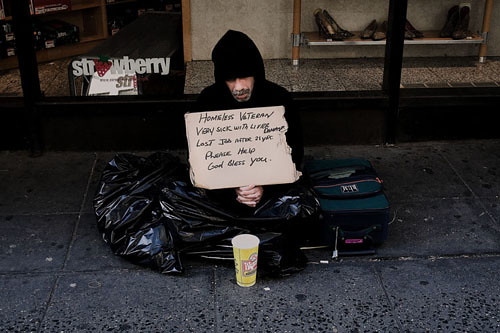
Homeless VeteranToday is Memorial Day. Formerly known as Decoration Day, today we remember the soldiers who died in service to our country.

One of the facts that is constantly overlooked on Memorial Day is that "about one-third of the adult homeless population have served their country in the Armed Services" according to the U.S. Department of Veterans Affairs:
http://www1.va.gov/homeless/page.cfm?pg=1

As we celebrate those who have lost their lives in service to our country, one of the best ways that we can honor them is to care their comrades who still carry the memory of their lost brothers and sisters with them.

Consider donating to one of your local homeless ministries today in honor of our fallen heroes, and those who survived to struggle under the burden of homelessness.

----------------------------------
What do you think? Please click the COMMENTS button below.

Wednesday, May 7, 2008

Gift Hub: Food Bank Visits Up

Phil Cubeta' recently blogged an article from Larry James on Gift Hub: Food Bank Visits Up. Here's a complementary piece on Red Orbit:

Food Charities Show Increase for Demand

It's going to take more than charity to end hunger.


----------------------------------
What do you think? Please click the COMMENTS button below.

Tuesday, April 1, 2008

Dallas Progress: The Establishment Should be Concerned

Thanks to pegasusnews.com for connecting us to Michael Davis of Dallas Progress and his article:

Superstars on the Rise


Michael is not a fundraiser. But he understands that we must argue for a shift of resources -- financial capital, social capital and human resources -- before we can drive change in depressed communities like Turner Courts.

Keep up the good fight, Mike. And thanks for citing Central Dallas Ministries' Dr. Janet Morrison and her blog, Janet Morrison's Community Dialogue, in your article.

----------------------------------
What do you think? Please click the COMMENTS button below.

Saturday, March 15, 2008

Dallas mayor urges businesses to fight homelessness


Thank you to Phil Cubeta for not only joining me at Central Dallas Ministries' recent Urban Ministries Prayer Breakfast, but for citing the event on his blog, Gift Hub: "Of Metrics and Prayers for the Poor".

The Dallas Morning News also covered the event in their article, "Dallas mayor urges businesses to fight homelessness." This article is cited below.

To grow physically and spiritually, Dallas Mayor Tom Leppert said Thursday the city must embrace the needs of its most vulnerable residents – particularly the homeless – and not leave them behind while those stronger thrive.

“To progress together, we need to understand the needs of others,” Mr. Leppert said during a keynote address before about 1,000 people at the Urban Ministries Prayer Breakfast at Dallas’ Hilton Anatole hotel.

Economic constraints, such as limited housing options and high gasoline prices, remain barriers to the homeless engaging in mainstream society, Mr. Leppert said.

But Dallas is poised to significantly improve homeless residents’ lives through the opening this spring of a new downtown homeless assistance center, the mayor explained. Mr. Leppert also said he envisions the creation of a $20 million housing trust fund that could be included in the city’s next public works bond package. Top city staffers project placing such a package before voters within three or four years.

The public sector, however, can only provide so much funding, Mr. Leppert said.

“The private sector must step up,” Mr. Leppert said. “Government can’t do everything and shouldn’t do everything. It should set a foundation, it should set priorities.”

To that point, the mayor called on area businesses to support, through word and checkbook, efforts combating homelessness and its root causes. General investments in Dallas will also create a stronger economic climate benefiting the entire community.

“Investments are, at their heart, a belief that we can create opportunities,” said Mr. Leppert, a career businessman and self-made millionaire who often crafts his political messages in economic terms.

But this morning, he stood before the crowd as part preacher and part politician.

Quoting Mother Teresa, Mr. Leppert said that the good one does today may be forgotten tomorrow. Do good anyway, he implored.

“In the end, it is between you and God,” he said.

Supporters hail Mr. Leppert’s ideas for reducing homelessness as at once compassionate and realistic.

But some homeless advocates have derided as callous one particular program Mr. Leppert strongly advocates: the Lend a Hand campaign, which calls on Dallasites to resist giving panhandlers money.

Instead, the campaign recommends, drop pocket change in any of several dozen lock boxes provided throughout the downtown area. Backers call it a vehicle for better supporting organizations dedicated to helping the homeless.

Larry James, chief executive officer of the Central Dallas Ministries, rejects such criticism of Mr. Leppert. He says the mayor’s efforts will only help the plight of Dallas’ homeless residents.

“This mayor is the real deal,” Mr. James said. “Tom Leppert cares about every street, every corner and every person in this city … He’s refreshing in every respect.”


Thank you also to the sponsors of the event:

Providing Hope
The John and Dorothy Castle Advised Fund of The Dallas Foundation

Providing Housing
Baron and Blue Foundation
Clay Cooley Automotive Group
Jon and Linda Halbert Family Foundation
Morning Star Family Foundation
Mr. and Mrs. J. McDonald Williams

Providing Health
Anonymous
Champion Partners, LTD
Church of the Incarnation
Texas Instruments
Thompson & Knight Foundation

Providing Hunger Relief
Abilene Christian University
Anonymous
Argent Property Company
Bank of America
Baylor Health Care System
Beaird Commercial Realty
The Beck Group
Don J. Clevenger
Scott Collier/The Staubach Company
Cornerstone Christian Church
Wesley and Teresa Crawford
East Dallas Christian Church
Embrey Interests LTD
Holmes Murphy & Associates
Dan and Sue Hopkins
Willie and Gigi Hornberger
Sam and Patricia Ligon
Sarah Losinger
Schuyler and Lila Marshall
Leadership Network
North Texas Food Bank
Glenn and Gabriella Owen
The Rees-Jones Foundation
Riverside Church of Christ
Dave and Cathy Shipley
Blake and Erynn Shipley
Kay and Kevin Thomason
Jim and Rhonda Walton
Walton’s Garden Center

----------------------------------
What do you think? Please click the COMMENTS button below.

Tuesday, March 11, 2008

Calling all Hunger Justice Leaders, ages 18-35!

Join me in applying to become one of Bread for the World's Hunger Justice Leaders. The award is an all-expense paid leadership training from June 14-17 in Washington, DC. The application is very brief, and mostly involves a 500-750 word personal statement. Mine is pasted below.

Every day, I go to work above the largest food pantry in North Texas. The path to my office is often packed shoulder-to-shoulder with hard working men whose wages are too low to cover both the rent and the grocery bill; young mothers whose only wish is to keep their babies healthy and well; seniors who go hungry rather than forego their life-sustaining medication.

These are not people whose bad choices landed them on the other side of the bread line. These are my neighbors. These are my brothers and sisters: fellow children of God who, like me, yearn for nothing more than a chance to use their talents to care for themselves and their families.

I grew up in the church. I went to religious schools my entire life, from kindergarten through college. I have studied the holy books of all the world’s religions, and seen my own brother stand before the altar to pledge his commitment to Christ as a priest of the Cistercian Order. God’s hand has guided much of my life.

Yet I have never seen His face more clearly than when I pass through the halls of my organization’s food pantry.

His voice speaks through the silence of those who come to us in need, whom we invite in not as “clients” but as partners in a shared effort to build community in this city that we love. The Holy Spirit’s presence is palpable when I wrap my arms around my neighbor whose bed is a box behind our building.

I am the Director of Development for Central Dallas Ministries. In some ways, my job is to raise funds for my organization’s efforts to end hunger in our community. In that role, I’ve had the privilege of seeing my organization’s revenues nearly double over the past three years.

Yet this is no achievement.

This is a testament to our failure as a community. Why should the area’s largest food pantry continue to grow each year for more than two decades? Why should neighbor after neighbor need to stand in line to receive food from our resource center? Why, above all, are there more churches in my community than homeless people – and yet so many of my friends continue to have no home? Night after night, they fight for sleep as a brief respite from the reminder that their situation could be solved if only each church in our town would take one of them into their care as did the Samaritan who did not even know of the glory that is our Jesus.

I will confess, I have occasionally left my office in tears because of our “success.” Every gift I secure for my organization helps us to feed more families, but these gifts alone will never solve the problems faced by my neighbors who rely on Central Dallas Ministries for support.

Our success can only be measured in our ability to put ourselves out of business.

We are yet many years away from that ambitious goal. With your help, I will use the 2008 Hunger Justice Leaders training to drive my organization closer to the day when no one qualifies for its services. I will take the knowledge gained from this event and apply it not only to my work as a fundraiser, but to my calling as a community organizer and to my daily life as a neighbor to those who suffer from chronic hunger.

I will use this opportunity to strengthen the network of committed Christians whose lives are similarly dedicated to capitalizing on this unique moment in the history of the world . . . when we finally have the knowledge and capacity to change the policies that perpetuate chronic hunger and generational poverty.

With your support, I will more firmly plant my feet in the ground and my shoulder more squarely against the wheel of change.

Together, as neighbors and friends, we can end hunger. Thank you for considering my application.


----------------------------------
What do you think? Please click the COMMENTS button below.

Thursday, March 6, 2008

The Homeless Need Homes (or, "Duhhhhhh")


Thanks to the Chronicle of Philanthropy for highlighting this major announcement, which has even made it to the pages of The Wall Street Journal.

Major Study Supports 'Housing First' Approach to Homelessness

A four-year study whose results will be announced today indicates that putting up homeless people in subsidized housing, even without focusing on other medical or behavioral problems first, saves the public money and reduces chronic homelessness, reports The Wall Street Journal.

The study, conducted by a number of hospitals and nonprofit groups, concluded that providing people with a home and a case manager at a cost of $12,000 per year saved taxpayer money because the once-homeless person spent less time in hospitals and emergency rooms.

Some homelessness experts, however, remain skeptical of the approach, especially for drug abusers and alcoholics. And the program appears to work only in conjunction with intensive follow-up by social workers. Still, the study seems likely to shift homelessness policy in the United States.
Read The Chronicle of Philanthropy's article here, including a link to The Chronicle's article on the housing-first movement and efforts to end homelessness by 2014. There was also an article about "Housing First" in last June's The Boston Globe.

At Central Dallas Ministries, we are working to provide permanent supportive housing to the chronically homeless in our community. Here is a video that we put together around this time last year... some interviews with our friends who are living on the street.

Friday, November 30, 2007

Will you still give after the holidays?

This op-ed in today's Dallas Morning News by Rev. Gerald Britt is well worth reading. One of the major difficulties that fundraisers for social service organizations face is the inability to raise funds throughout the year, not just in "the season of giving."

We all need to find ways to ask our donors the questions that Rev. Britt asks below. And, even more importantly, we need to work at helping them to understand the importance of their answers.

Will you still give after the holidays?
The need doesn't end after the Christmas gifts are opened, says GERALD BRITT 12:00 AM CST on Friday, November 30, 2007


For 15 years, I've had the privilege of preaching a Thanksgiving service at a church in South Dallas. The worship itself that day is sandwiched in between a very generous breakfast and traditional dinner, served after the benediction.

The church budgets for this feast, and its members set aside time to cook and serve nearly all day before they go home to their own families. The guests of honor are the homeless of our city.

The pastor and members have made this a part of the life of their church. They would no more consider not doing this than they would think of not celebrating Thanksgiving at all.

Indeed, a large number of the homeless being served have been received as members of this church. The church picks them up every Sunday, serving them a hot breakfast before worship and lunch afterward.

Neither this pastor nor his congregation is looking for publicity or congratulations. In fact, they want to do more. But for a middle-class African- American church of relatively modest means, this is significant work, and they serve as an object lesson for the rest of us.

At Central Dallas Ministries, this season brings calls from other churches that want to minister to the poor and homeless. They provide blankets or food, or they share their witness. They are needed and wanted; we welcome their compassion during this season.

But we, along with other nonprofits and congregations, want people of good will and compassion to remember that their help is most needed after the holidays pass – and before they come again.

Issues related to poverty are not seasonal. Joblessness and underemployment, hunger and food insecurity, education, crime, homelessness and substandard housing are year-round problems calling for year-round engagement.

Central Dallas Ministries couldn't exist without partners who understand this and respond to it passionately and generously. One out of every five children in Dallas is raised in poverty, 10 percent of our nation's poor live in our state.

Seasonal charity cannot solve this problem. Poverty is a complex web of personal responsibility, public inaction and disconnectedness. The poor need to know that they live in a world that understands their pain and is willing to endure it with them.

The misguided materialism that some accommodate alongside their faith – suggesting that poverty is a sign of the need for personal spiritual salvation – is unfortunate and inaccurate.

I know many among the poor whose faith puts mine to shame. The poor need those who care enough to demonstrate the power of their faith through genuine concern for their quality of life. Are there poor and homeless who reject help and don't want to try? Of course there are, but stereotyping all the poor in such categories is like saying that all rich people are selfish and greedy.

There may be some truth to that, but it's not the whole story.

What are the year-round gifts that are needed? We need employers willing to give the poor opportunity with living-wage jobs, and we need to address hunger every day. We need for-profit developers willing to take some risks in reviving distressed neighborhoods and strategic public policy to help mitigate some of that risk. We need to augment classroom learning with increased funding for more innovative after-school programs that feature tutoring and enrichment.

We need more churches willing to receive and nurture ex-prisoners re-entering society and help them live productive lives.

In short, we need many more neighbors who will see it as their mission to connect a whole city by caring all year long.

The Rev. Gerald Britt is vice president for public policy at Central Dallas Ministries. His e-mail address is gbritt@centraldallas ministries.org

Sunday, November 25, 2007

All I want for Christmas is a few good donors...

In honor of the recent Thanksgiving holiday, and some thoughts that I had in response to Charity Navigator's Holiday Giving Guide 2007, I'd like to offer my own thanks for the donors of the world who give wisely.

Of course, as the desperate fundraiser that I am, I appreciate any and all donors. I will not be so bold as to say that I have never bent over backwards to take some fool's charity. I have certainly done so, and will likely do so again as we approach the year's end and my concern for reaching a surplus overrides my better sense of how to build my organization's long-term sustainability.

But as I prepare for December, when we receive in excess of 1/3 of our gifts from individuals, I would like to offer thanks for the elite few whom I see as wise givers.

What makes for a wise giver?

  • They take time to get to know the organizations that they support -- whether through conducting their own online research, having conversations with staff or visiting in person, they ensure that their gifts are made to worthy organizations.
  • They either enroll in the organization's recurring gifts program (i.e. monthly charges to their credit card) or they send checks throughout the year... not just at the year's end.
  • They give without restrictions, and invest in the overall organization rather than in one of its projects.
  • They opt out of receiving print communications, including printed receipts for their gifts, in order to save the organization money.
  • They help introduce people to the organization who might be interested in supporting it.
  • They get involved in advocating on behalf of the organization's mission.
There are likely many other things that donors could do to be a wise giver. For example, for some organizations, it might be very important for a donor to be involved as a volunteer in the delivery of the organization's mission. For others, though, there is no such need for volunteers -- in fact, outside volunteers can frequently be a distraction imposed on programs by the development office in order to cultivate gifts.

But these items above are what I consider the gold standard of wise giving. I would rather have a donor give me half as much money while meeting this standard than twice as much money while falling short of these bars. Perhaps I am myself a grand fool, but I believe that I have one true goal as a fundraiser:

"To put myself out a job."

I know that, in reality, this is not a likely possibility. But we as fundraisers must strive to build a core group of committed donors who do not need a professional fundraiser to cultivate their gifts -- they are firmly committed to the organization, and draw other committed donors into their orbit. By focusing on creating this kind of momentum, fundraisers can move their organizations closer to that day when they no longer need to rely on professional development staff to help pay the bills.

Until we get there, we have much to do. For every wise giver, there are hordes of charitymongers who need counseling. Here is some advice on how you can impart wisdom unto the masses:
  • Don't fear the reaper. Put your financials and Form 990s directly on your Web site for easy downloading, as well as links to your listing on Charity Navigator or Guidestar. If you're on it, be sure to link to your listing on Charity Watch.
  • In every receipt letter, offer to meet with donors to take a tour of your organization to see their dollars at work.
  • Call every donor who makes a gift to your organization. If that sounds like too much to do on a daily basis, set aside one day per month in which you and a handful of other staffers/board members make calls to the last month's donors just to say thank you and to invite them on a tour. Be sure that they know that you are not calling to ask for money.
  • Offer free events that are easy for donors to attend, meet staff, learn more about the organization and invite others without feeling pressured to make a gift. At Central Dallas Ministries, we have a free monthly book club that attracts around 80-100 people each month to our ministry; this has been a great way to meet people and to get to know our donors better.
  • As much as I hate special events, you should offer at least big fundraiser per year that provides your closest donors with an opportunity to engage their contacts in supporting your organization. Remember that there are many ways to evaulate such events beyond their own bottom line: there is great value in making your top donors more committed to your organization, and in attracting new donors to you (particularly if you follow up with phone calls and invitations to tours).
  • Offer a recurring gifts program that includes both monthly charges to credit cards as well as monthly transfers from banks. Promote this program in your communications with donors (including finding a way to mention it in receipt letters without directly asking for more money... cite it as a convenience for busy donors).
  • Let donors know that you need funds throughout the year, not just at the year's end. Find ways to educate them on the cash flow of your organization in your communications pieces. Many donors do not realize how difficult it is for organizations that rely on the "feast or famine" style of year-end fundraising.
  • Offer options for designations, but show the benefit of giving without restrictions. In your communications, feature stories about donors who invested in the overall organization rather than grants to one project.
  • Provide donors with the ability to opt out of receiving print communications, including printed receipts for their gifts, in order to save your organization money. Ensure that you have the ability to follow through with this promise, if you offer it.
  • Provide donors with meaningful ways to introduce people to the organization who might be interested in supporting it. In addition to public events, let your firmly committed donors know that you would be able to host a tour for any of their contacts that they might be interested in introducing to your organization. At board meetings, highlight the contributions of board members who have successfully brought new donors to the table.
  • Explore ways for donors to set up their own fundraising site for your organization. There are many tools out there that can help with this. Here is an example of one that we use at Central Dallas Ministries.
  • Educate your donors on how they can advocate on behalf of your organization's mission. Let them know about the public policy ramifications of your work, the barriers that you face and how public representatives could be engaged to help your organization. Regardless of what comes from these actions, providing your donors with the ability to get more engaged in your mission will strengthen your relationship to them.
  • Provide meaningful ways to get involved as a volunteer on a case-by-case basis. Get to know your donors and their interests, and then map those interests to your needs -- and be sure that it is a genuine need. Do not create something for donors to do simply for the sake of giving them something to do. It will inevitably erode your relationship because they you will both realize that they are not helping you.
A belated Happy Thanksgiving to everyone who reads this blog. I hope that you are well and warm, and that this blog continues to be useful to you. As always, I welcome your feedback on how I can improve it.

Good luck with the rest of your year! As we approach 2008, I hope that you can avoid the fate of this poor Santa...

Thursday, November 8, 2007

I need to sharpen my razor...

A new report from the Internal Revenue Service shows the wealthiest 1 percent of Americans earned a record 21.2 percent of all income in 2005 — up from 19 percent in 2004.

Meanwhile, the bottom 50 percent earned 12.8 percent of all income, down from 13.4 percent in 2004. According to the IRS, the median tax-filer’s overall income fell 2 percent between 2004 and 2005.

(sigh)

Charity is not enough. See the string here:
http://www.gifthub.org/2007/11/from-history-ne.html

Monday, November 5, 2007

Fundraisers need to take a stance: Tomorrow's important vote in Dallas


For those who might ask what this has to do with fundraising for social service organizations, let me respond by saying that I do not think that such fundraising should be strictly focused on bringing in revenues for one organization.

In our jobs as fundraisers, we should primarily be focused on advocating for an allocation of the community's resources in a way that supports our non-profit's mission.

Directly raising funds for our organization is obviously the clearest way to do that. However, taking actions that result in increased funds for organizations that complement our organizations' mission is also a worthy pursuit -- particularly when such actions "increase the pie," rather than simply reslice it.

But we also must not neglect the importance of supporting large, public initiatives that also complement our organizations' various missions. We must acknowledge that the government has a capacity to address the needs of society at a scale that dwarfs even the largest charitable efforts.

That being said, I realize that a 501(c)(3) cannot ask people to vote in a particular way. This limitation on "institutional communications" from your organization, however, should not limit your personal voice.

In addition to supporting initiatives that allocate resources in a way that supports their organizations' missions, fundraisers should also take actions to prevent the allocation of resources that stand against their missions.

In my case, I work for Central Dallas Ministries. Our mission is to share the love of God by building genuine community in the neighborhoods where we live and work.

We live and work in Downtown Dallas.

Downtown Dallas needs people to call it home, not just a place to work. Only then will it begin to provide "genuine community" to those who live and work there.

For that reason, I am going to ask all the Dallasites who read this blog to vote FOR PROPOSITION ONE tomorrow (November 6).

(This is not a request on behalf of Central Dallas Ministries, which takes no organizational stance on this or any other vote. This is my personal request, which comes out of my personal understanding of what is best for our community.)

Tollroads will not bring people to live Downtown. They will efficiently carry them in and out of it.

For this reason, I am going to ask you to consider voting FOR PROPOSITION ONE on tomorrow's ballot. This proposition's passage will help ensure that a tollroad is not built through the land where Dallas was supposed to receive a park.

For more information, please visit:
TrinityVote - A Community Movement to Reclaim the Trinity River Project

More importantly, please read this blog from the Dallas Observer's Jim Schutze:
At Least One Developer Thinks a Toll Road Taking People Away from the City's a Bad Idea

If the city wants to fill up downtown with the kind of energetic young people who might want to live there, he said, the city needs to get the rents downtown way down from the $1,400 level. He gave me a theoretical example of a project downtown where the owner needs to get $850 a month per unit to make money. What the city should do, he said, is subsidize those units so the rent will be $600 a month.

The key, he said, is not poverty-level housing or rich-people housing. It’s affordable housing. If the city were willing to spend its money making downtown affordable, then the city could develop the kind of occupancies downtown that would support retail, entertainment and neighborhood service industries.
Please consider reading the full blog
here.

Thursday, November 1, 2007

Trent Stamp's Take: We're All to Blame for this Travesty

As I read Trent Stamp's most recent blog, I recalled an earlier post from Slate Magazine's Darshak Sanghavi entitled, "Is it cost effective to treat the world's poor?"

(a good read in its own right)

In his blog, Trent Stamp's Take, Mr. Stamp describes how "U.S. lawmakers recently held hearings to announce that foundations need to do a better job of giving funding to people living below the poverty line, especially minorities and those living in rural communities. Some members of Congress even advocated changing the tax code so that only donations to groups that serve the poor were fully tax-deductible. According to our elected leaders, our poor are not being served by foundations and high-end donors who have abandoned them for other causes."

His full post, "We're All to Blame for this Travesty," is well worth your time.

DISCUSSION: What do you think is the best approach to poverty?

Saturday, October 20, 2007

School District raises $9.3 million in philanthropy


An amazing campaign recently hit an important milestone... though I am saddened that the school district must make such an enormous effort to raise funds, it is truly an honor to post this wonderful announcement here on this blog. Perhaps one day our country will make adequate and effective investments in the school system so that our public schools do not have to rely on charity to achieve their mission?

Thanks to the Dallas Morning News' Robert Miller for his coverage of this event.

DISD campaign raises $9.3 million
12:00 AM CDT on Tuesday, October 9, 2007

Dallas community leaders have rallied around a plan to achieve academic excellence in the Dallas Independent School District with a passion and sense of unity rarely seen in the city's history.

The campaign is announcing $1 million gifts today from the Harold Simmons Foundation, W.W. Caruth Jr. Foundation Fund of the Communities Foundation of Texas and Texas Instruments Foundation, bringing the total to $9.3 million.

"The Road to Broad" is being pushed by Dallas Achieves Commission as a candidate to win the nationally coveted Broad Prize for Urban Education by 2010.

J. McDonald "Don" Williams, a retired managing director of Trammell Crow Co. and co-chairman of Dallas Achieves Commission along with Pettis Norman and Arcilia Acosta, explained the background of Dallas Achieves.

The commission was organized by Superintendent Michael Hinojosa to support the goal of making the district one of the country's top-performing urban school districts within five years, with every graduate college- and workforce-ready.

It is a collaboration of the Foundation for Community Empowerment with the co-sponsorship of DISD, Texas Instruments and the National Center for Educational Accountability.

"I believe public school transformation is the most important task for the future of our democratic society, as well as our workforce," Mr. Williams said. "And I now know that it is doable.

"DISD is overwhelmingly poor and ethnic minorities, about 160,000 kids, [but] demographics need not be destiny.

"We plan to raise $20 million locally to leverage national funders to join us. Also, over time we must provide a much more robust and expansive early childhood set of programs for low-income children so they can arrive at school either already reading or ready to read.

"We have a long way to go here in Dallas, [but] this transformation is possible."

Other major donors include:

• $450,000 to $1 million – Hoblitzelle Foundation, The Roger and Rosemary Enrico Foundation, Sally and Lee Posey and Ellen and J. McDonald Williams.

• $300,000 to $450,000 – Lisa Blue and Fred Baron, Nancy and Randy Best, Deedie Potter and Edward W. Rose and Gay and William T. Solomon.

• $150,000 to $300,000 – Belo Corp., Dallas Citizens Council, Molly and Gregg L. Engles, Linda W. Hart and Milledge A. Hart III, Hawn Foundation, H-E-B/Central Market; Susan and Larry Hirsch, Naomi D. Aberly and Laurence H. Lebowitz, Joy and Ronald Mankoff, The Eugene McDermott Foundation, Ellen and John McStay, Alice and Erle Nye and The Rosewood Foundation.

• $25,000 to $150,000 – American Airlines Inc., Austin Industries Inc., Nell and Henry C. Beck Jr., ChildCareGroup, The Constantin Foundation, Trammell S. Crow, The Dallas Foundation, Esping Family Foundation, Marguerite Steed Hoffman, The Lightner Sams Foundation Inc., Bobby B. Lyle, Ivette and Pettis Norman, The Vin & Caren Prothro Foundation, Cindy and Howard Rachofsky, Peggy and Carl Sewell, Phyllis and Ron Steinhart, Tenet Healthcare Corp., Todd Wagner Foundation, Washington Mutual Bank, Abby and Todd Williams and an anonymous donor.

Wednesday, July 18, 2007

Let the rich take care of the poor?


On Sunday, I put up a blog comparing some credit card thieves to a misguided Robin Hood...

Today, on an interesting parallel, I'll highlight The Chronicle of Philanthropy's recent articles:

Can we trust the rich to take care of the poor?

Wednesday, July 11, 2007

Robert Egger's Analysis of Charity's "Caste System"


Our good friends at The Chronicle of Philanthropy -- where would our sector be without them??? -- have recently written about the inimitable Robert Egger of D.C. Central Kitchen.

Antihunger Expert Notes "Caste System" in Relief Efforts

As someone who particates in the system Mr. Egger describes, I can definitely support his analysis. Indeed, I am guilty of this same problem!

What to do?

Any ideas on how fundraisers can help change this system?

Sponsored By